Multi channel communication means your business shows up in more than one place customers already use, then manages those conversations with clear rules so nothing gets missed. For local brands, that matters because more calls, messages, booking requests, and review opportunities happen when people can reach you on the channel they prefer instead of the one your team happens to watch.
A franchise owner usually sees the problem first in operations, not marketing. One location answers Google reviews quickly, another ignores SMS leads, a third has a front desk that handles email well but misses web chat. Revenue leaks out through inconsistency. A practical multi channel communication system fixes that without forcing every store into enterprise-level complexity.
What Is Multi-Channel Communication Really
A homeowner finds your business on Google, clicks to your site, leaves without booking, then replies to a review request by text two days later. Another customer calls the location directly after seeing your Google Business Profile, while a third sends a Facebook message asking about availability. All three are ready to buy. If those conversations live in separate places with no rules, response times slip, follow-up gets inconsistent, and booked revenue depends too much on which location is staffed well that day.
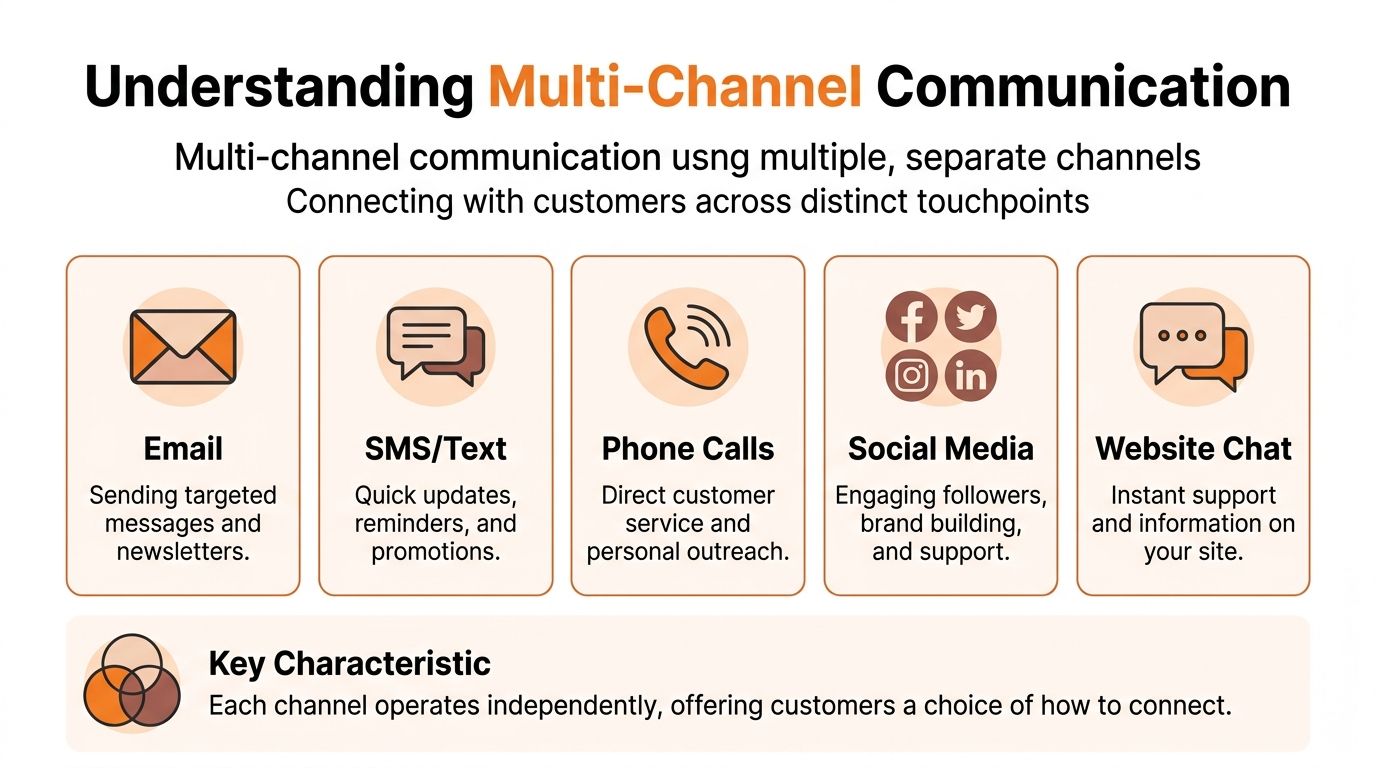
Multi channel communication means your business uses several customer contact points, such as email, SMS, phone calls, social messaging, website chat, and Google Business Profile interactions, to reach and respond to customers. Each channel can function on its own. That is useful, but it also creates operational gaps if no one owns the handoff between channels.
Omnichannel communication connects those interactions so the customer history carries across channels. Multi-channel works like separate specialists doing good work in their own lanes. Omnichannel works like one coordinated team sharing context, notes, and next steps.
Why this distinction matters for local operators
For franchise and multi-location service brands, the difference is not academic. It affects whether reviews get answered fast, whether missed calls turn into booked appointments, and whether local SEO gains produce revenue.
A dental group can have email reminders, text confirmations, live chat, and Google reviews active across every location and still run a sloppy system. An HVAC brand can answer phones well but let Facebook messages sit for a day. A med spa can generate leads through paid search and lose them because nobody follows up after the first inquiry. Those businesses already have multiple channels. What they lack is channel discipline.
That is the gap local operators need to solve first. Before chasing a perfect omnichannel setup, set clear rules for who owns each inbox, how fast each channel gets a response, which messages need escalation, and how review requests tie back to appointments. For local businesses, the practical goal is simple: turn more searches, messages, and service interactions into reviews, rankings, and bookings.
Hospitality teams have run into the same issue. This analysis of connected guest communication systems in hospitality describes the operational friction that shows up when messages are spread across disconnected tools. Local service brands feel that same friction, just on a smaller budget and with less room for process waste.
Key facts franchise owners should care about
- Businesses using multiple channels in a coordinated way tend to outperform single-channel outreach on conversion and retention, as noted earlier in this guide.
- Well-connected customer communication systems are associated with higher lifetime value and better repeat business, especially when handoffs between channels are tracked instead of guessed.
- Adoption is not the hard part. Execution is. Gartner's research on multichannel marketing execution gaps has long pointed to the difference between being present on many channels and managing them well.
Practical takeaway: For most multi-location operators, the profitable move is to make multi channel communication consistent before trying to make it fully unified.
In practice, that means your marketing, listings, reviews, and lead handling need to work together in one operating rhythm, not as separate tasks owned by different people with different standards. If you want a clearer model for making that happen, start with a system for connecting marketing, listings, reviews, and lead handling across locations.
Why a Multi-Channel Strategy Drives Local Conversions
A homeowner finds your plumbing company in Google search at 7:10 p.m. They read two recent reviews, tap to call, get no answer, check your site, and leave. At 7:18 p.m., they message another provider through web chat and book the job. The difference was not brand awareness. It was channel coverage at the moment intent was highest.
That is why multi channel communication drives local conversions. Local buyers rarely move in a straight line from search to booking. They compare reviews, scan service pages, call, text, submit forms, and revisit later. Each step either keeps momentum or breaks it.
For franchise owners, the revenue question is simple. Are your locations easy to reach, easy to trust, and easy to book across the channels customers already use?
Why this matters for local service revenue
A good multi-channel setup does more than create more touchpoints. It improves the parts of the funnel that move revenue for local businesses.
It helps you:
- capture leads after hours instead of losing them to the next provider
- increase booking rates by following up in the channel the customer responds to
- generate more recent reviews because requests happen consistently after the visit
- strengthen local SEO signals by keeping service details, response patterns, and customer language aligned across profiles and pages
- reduce lead waste caused by missed calls, slow responses, and disconnected handoffs
That last point matters more than many teams expect. In local service categories, a missed call is often a lost sale, not just a delayed conversation.
How multi channel communication supports local visibility
Google local performance still comes down to proximity, relevance, and prominence. Proximity is largely fixed. Relevance and prominence are operational.
Multi channel communication improves both when it is set up with clear roles.
| Local ranking factor | What multi channel communication improves |
|---|---|
| Relevance | Better alignment between your Google Business Profile, service pages, FAQs, booking flows, and customer questions across channels |
| Prominence | Steadier review generation, faster public responses, stronger engagement signals, and a more credible customer experience |
This is the practical difference franchise owners care about. Multi-channel is not just being present on search, text, email, chat, and reviews. It is using each one to support discovery, trust, response speed, and bookings at the location level.
A med spa in [City] might win more consults because web chat catches evening questions and SMS follow-up closes them the next morning. A vet clinic in [Neighborhood] might see stronger map performance because review requests go out on time and staff respond to new reviews every day. An auto shop might convert more calls because the customer sees fresh review responses and accurate service information before dialing.
What produces conversions, and what creates noise
The locations that get results usually do a few things well.
What works
- Giving each channel a defined conversion job
- Routing inbound leads so the right person replies fast
- Using reviews as trust proof and as a local SEO asset
- Keeping service, hours, and booking information consistent across profiles and landing pages
- Following up based on customer behavior instead of blasting the same message to everyone
What does not
- Posting or sending the same message everywhere
- Letting each location improvise its own response process
- Treating reviews as a separate reputation task instead of part of lead generation
- Adding new channels before the current ones are staffed and monitored
- Measuring activity instead of booked jobs, close rate, and review volume by location
There is a trade-off here. More channels can increase conversions, but only if response standards stay tight. If a location adds chat, SMS, and social messaging without routing rules, the team gets busier while conversion rate stays flat.
Tip: A review response does two jobs. It reassures the past customer, and it gives the next customer visible proof that your location is active and accountable.
For many operators, the fastest lift comes from tightening the customer communication strategies that support inquiries, bookings, review requests, and recovery follow-up. Those are the moments closest to revenue, and they are usually where local conversions are won or lost.
How to Build Your Multi-Channel Communication Plan
Monday at 8:07 a.m., one location has three missed calls, two Google messages, a web form from Sunday night, and a new one-star review waiting for a response. The problem is rarely channel count. The problem is that no one has decided what gets answered first, who owns it, and what happens when that person is tied up with customers in the lobby.
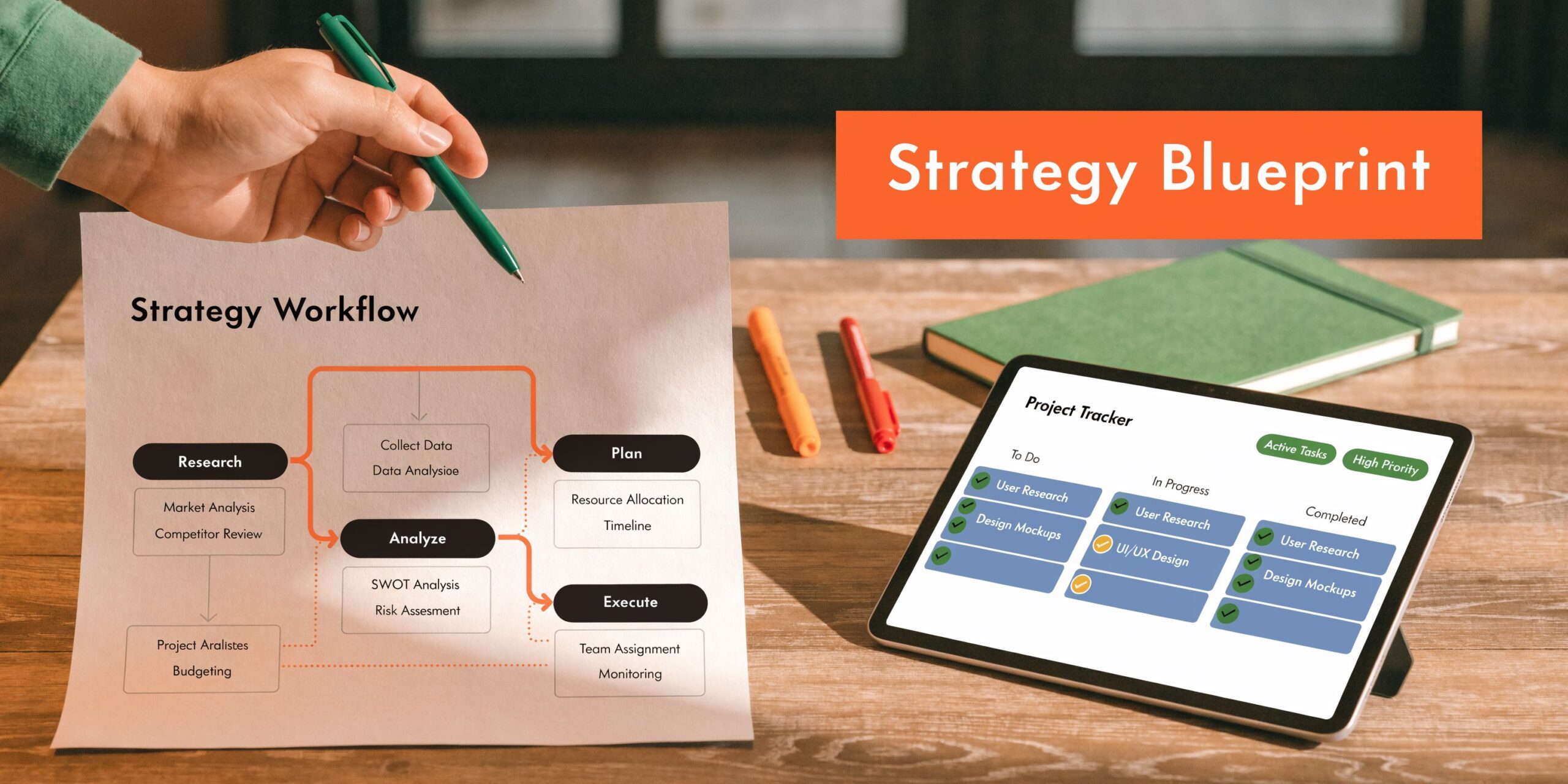
For franchise operators, a workable plan does two jobs at once. It protects response speed, and it connects each channel to revenue. If a message path does not help a prospect discover you, trust you, book with you, or come back, it should not get prime attention from the team.
Audit the customer journey first
Start with what customers use, not what your software stack makes available.
Map every active touchpoint by location, then mark three things beside each one: lead volume, response owner, and conversion action. For local service brands, that usually exposes the gap between marketing and operations. Google Business Profile drives discovery. Reviews shape trust. SMS gets responses. Phone closes urgent jobs. Email supports longer consideration cycles. Yet many locations still treat these as separate tasks handled by different people with no shared rules.
Review these channel groups:
- Discovery channels: Google Business Profile, Apple Business Connect, Bing Places, location pages
- Direct response channels: phone, SMS, web forms, website chat, email
- Trust channels: Google reviews, Facebook reviews, vertical review sites
- Social inboxes: Facebook Messenger, Instagram DMs, any platform your locations actively monitor
Then answer four operational questions:
- Which channels produce booked appointments or estimate requests?
- Which ones create work but rarely lead to revenue?
- What sits unanswered after hours?
- Where do reviews, inquiries, and follow-up live today?
That last question matters more than teams expect. If review requests, lead follow-up, and listing management all sit in different tools, local conversion work gets fragmented fast.
Choose channels by buying behavior, not by trend
A good multi-channel plan for a local business is usually narrower than owners expect.
Urgent-need categories such as HVAC, plumbing, restoration, and towing should center the phone first, then SMS, then Google Business Profile. Considered services such as dental, med spa, legal, and senior living usually need a different mix: Google Business Profile for discovery, web form or phone for first contact, then email or SMS for nurture and follow-up.
The trade-off is straightforward. Every new channel increases monitoring demands, training time, and the odds of missed handoffs. Add channels only when the current set is staffed, routed, and measured.
A simple rule helps here. Each channel gets one primary job.
- Google Business Profile: discovery, trust, and direct local inquiries
- Phone: high-intent leads and urgent bookings
- SMS: confirmations, reminders, review requests, short follow-up
- Email: education, estimate follow-up, reactivation
- Website chat or web forms: capture leads when staff cannot answer live
That is how local businesses avoid the usual multi-channel mistake. They stop treating every inbox equally and start assigning channels based on buying intent.
Set service standards before you add automation
Automation without rules creates faster confusion.
Write down response standards by channel, by location, and by shift. If a Google message is not answered within your target window, it should reroute. If a review mentions a billing dispute or safety issue, it should escalate. If a web form arrives after hours, the first response should be automatic, but ownership for the next live follow-up should still be assigned to a person.
Use a governance model your managers can run without extra meetings:
- Primary owner: first responder for each channel
- Secondary owner: backup during lunch, weekends, call-outs, or overflow
- Escalation path: complaints, refunds, clinical issues, and reputation risks
- Response target: how fast each channel must be answered
- Template library: approved replies for common scenarios, stored in one place
- Review workflow: who requests reviews, when they go out, and who responds
If your teams need a starting point, use these customer service response templates for common lead, support, and review scenarios and adapt them by brand, location, and service line.
A short explainer on channel orchestration can help your managers visualize the workflow:
Build around Google Business Profile first
For many franchise systems, Google Business Profile is the channel that ties multi-channel communication to local revenue most directly. It influences how often a location gets discovered, what customers believe before they click, and how many prospects choose to call, message, or book.
That makes GBP a communication channel, not just a listing.
Use this checklist at every location:
- Turn on messaging only if someone will monitor it consistently
- Confirm NAP, hours, categories, and services
- Add accurate service descriptions that match local search intent
- Answer common pre-sale questions in the Q and A section
- Upload current photos of the team, storefront, vehicles, or treatment space
- Review and respond to new feedback on a set schedule
- Check booking links and call tracking numbers regularly
Checking booking links and call tracking numbers regularly makes the multi-channel versus omnichannel debate practical. Franchise owners do not need a theory lesson. They need Google visibility, faster replies, stronger reviews, and more booked jobs with less operational drag. A clear plan connects those pieces so each location can execute the same playbook without sounding robotic or creating inbox chaos.
Done well, multi-channel communication feels simple to the customer. They find the nearest location, see current reviews, choose the easiest way to reach you, and get a timely answer that moves them toward a booking. That is the standard.
Industry Playbooks and Ready-to-Use Templates
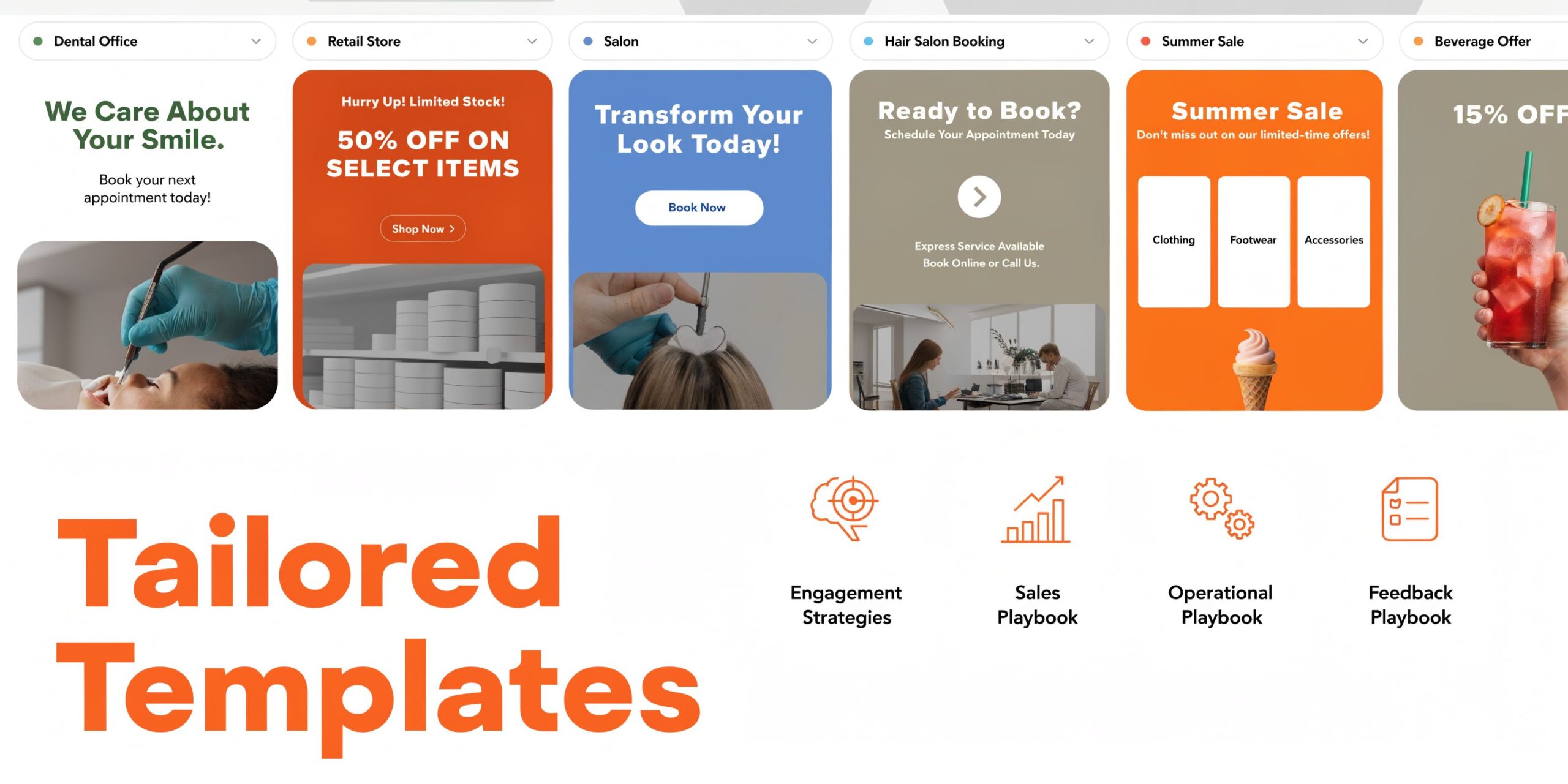
Templates matter because franchise systems break when every location improvises. What works in a med spa also needs adjustment for HVAC, dental, auto, and senior living.
Use the scripts below as a starting point. Keep names, location references, and service details accurate. In healthcare settings, avoid protected health information and keep wording HIPAA-aware.
Dental and healthcare practice templates
SMS review request
Hi [First Name], thanks for visiting [Practice Name] in [City] today. If you can spare a minute, we would appreciate your feedback here: [Review Link]. Thank you for helping other patients find a trusted local practice.
Email review request
Subject: Thank you for visiting [Practice Name]
Hi [First Name],
Thank you for choosing [Practice Name]. We work hard to make each visit clear, comfortable, and on time. If you would like to share feedback, please leave a review here: [Review Link].
Thank you,
[Practice Name]
Positive review response
Thank you for your kind words, [First Name]. We appreciate you choosing [Practice Name] in [City]. Our team is glad you had a positive experience, and we look forward to seeing you again.
Negative review response
Thank you for your feedback, [First Name]. We take concerns seriously and want to address this appropriately. Please contact our office at [Phone] and ask for [Manager Name] so we can follow up directly.
HVAC and home services templates
SMS review request
Thanks for choosing [Company Name] for your service in [City]. If our team helped today, would you leave a quick review here? [Review Link]
Email review request
Subject: How did we do today?
Hi [First Name],
Thank you for trusting [Company Name] with your service visit. Your review helps other homeowners in [Neighborhood] find a reliable local team. You can leave feedback here: [Review Link].
Thanks again,
[Company Name]
Positive review response
Thank you, [First Name]. We appreciate the opportunity to help with your home service needs and are glad our team delivered a strong experience.
Negative review response
Thank you for bringing this to our attention. We are sorry to hear your experience did not meet expectations. Please contact [Phone] so our service manager can review the details and work toward a resolution.
Automotive repair templates
SMS review request
Thanks for visiting [Shop Name]. If you have a moment, please share your experience with our team here: [Review Link]
Email review request
Subject: Thanks for trusting [Shop Name]
Hi [First Name],
We appreciate the chance to service your vehicle. If you found the visit helpful, we would value your review here: [Review Link].
Thank you,
[Shop Name]
Senior living templates
SMS review request
Thank you for visiting [Community Name] in [City]. We would value your feedback on your tour experience: [Review Link]
Email review request
Subject: Thank you for touring [Community Name]
Hi [First Name],
Thank you for spending time with our team. Choosing a senior living community is an important decision, and your feedback helps other families as they evaluate options. If you would like to share your experience, please use this link: [Review Link].
Warm regards,
[Community Name]
Response guidance for all locations
If you run a multi-location brand, require approved templates but allow light local personalization. That keeps the voice consistent without sounding robotic.
For a broader set of reply examples by scenario, keep a shared library of customer service response templates. It gives store managers a starting point when they need to respond quickly without guessing.
Do not copy and paste the exact same review response across every location. Keep the structure standardized, but vary wording enough to sound human and specific.
Measuring What Matters Proving Your ROI
The cleanest multi channel communication plan still fails if you cannot tie activity to calls, bookings, tours, and closed revenue. Measurement needs to be simple enough for location teams and detailed enough for regional reporting.
Data analytics from integrated platforms show that businesses that identify and optimize high-engagement channels can significantly boost customer satisfaction and achieve substantially higher conversion rates. Dental practices using AI-assisted replies also saw 35% more high-quality reviews, according to CCR Group’s overview of multichannel communication performance.
The metrics that matter most
Track these per location, then review at brand level:
| Metric | Target (Per Location, Per Month) |
|---|---|
| Review volume | Increase steadily month over month |
| Review recency | New reviews every month with no long gaps |
| Response time | Fast enough that leads and complaints do not sit unattended |
| Star rating | Maintain a strong, credible rating trend |
| GBP views and calls | Monitor for direction and consistency |
| Lead-to-sale conversion | Improve by channel and by location |
Not every business needs the same benchmark. A senior living community, med spa, and HVAC brand have different buying cycles. What matters is consistency, location-level visibility, and channel attribution.
How to track GBP to calls and bookings
Use UTM parameters on links from your Google Business Profile to your site or booking page. A basic setup lets you distinguish traffic from GBP versus email, SMS, or social.
For example, tag your booking link so analytics can identify:
- Source: google
- Medium: organic or local
- Campaign: location-name or GBP-booking
Then connect that traffic to:
- booked appointments
- form submissions
- call clicks
- tours scheduled
- closed sales where available
If your team needs a plain-English walkthrough, this guide on how to measure marketing ROI is a useful companion resource.
Build one dashboard, not five reports
Regional operators should not wait for each location to self-report. Pull review activity, response speed, profile performance, and lead outcomes into one view.
That is the difference between “we think location 12 is doing fine” and “location 12 is missing review responses, underperforming on bookings, and lagging other stores on GBP calls.”
A strong local SEO reporting setup helps franchise owners compare locations fairly, spot breakdowns early, and coach store managers on the actions that affect revenue.
Best practice: Review channel performance monthly, but review response speed and missed conversations weekly.
Centralize Your Communication with Reviews To The Top
Most multi-location teams do not need more channels. They need fewer disconnected workflows.
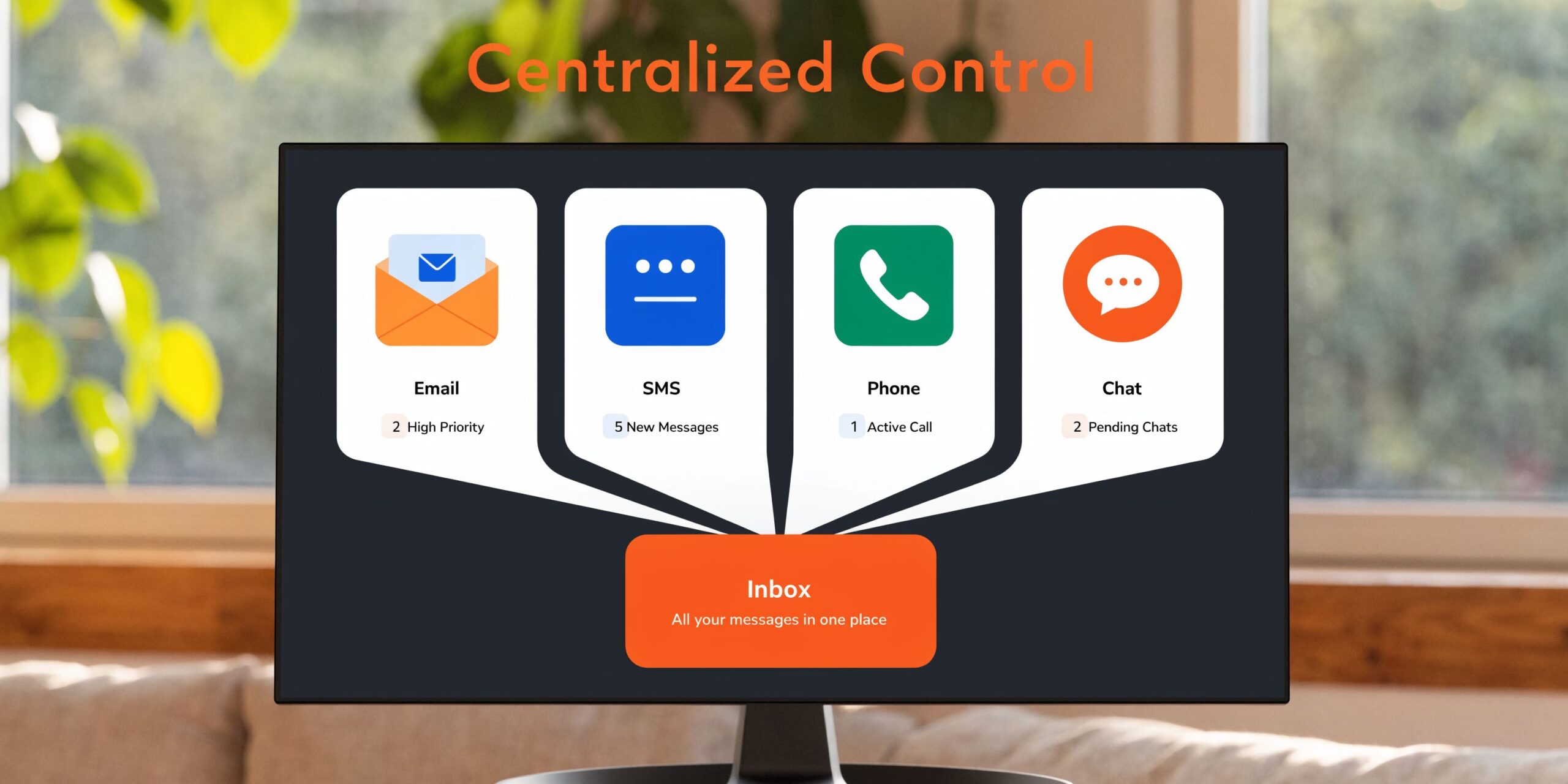
Centralization changes the economics of follow-up. Platforms powered by technology like Birdeye unify channels such as webchat, SMS, and email into single-thread conversations. This can significantly reduce handling time and error rates through automation rules. Benchmarks also show that maintaining 95% compliance on a response SLA under 2 hours can yield a 28% uplift in customer ratings, according to Communicat-O’s multichannel strategy analysis.
What centralization fixes
A centralized communication model solves common operator problems:
- Missed leads: Messages are not buried in separate logins.
- Slow review replies: Teams can work from one queue instead of checking each platform manually.
- Inconsistent brand voice: Templates and permissions help locations stay on brand.
- Escalation confusion: Sensitive issues can be routed to the right person fast.
For franchise groups, that matters more than theory. A practical system lets a store manager handle routine feedback while regional leadership sees the exceptions.
7-day launch checklist for a review program
Use this as a tight rollout plan for one location or a pilot group.
Day 1: Confirm business profile accuracy across Google, Apple, Bing, and key directories.
Day 2: Choose your review request channels, usually SMS and email.
Day 3: Approve brand-safe templates for requests and review responses.
Day 4: Assign response ownership by location, shift, and escalation path.
Day 5: Turn on monitoring for reviews, messages, and web leads in one dashboard.
Day 6: Test live requests, responses, and issue-routing with real staff.
Day 7: Review first results, fix bottlenecks, and roll the workflow to additional locations.
Where Reviews To The Top fits
For operators who want the process managed without adding front-line chaos, customer communication management software gives you the structure that most brands try to build with disconnected tools. Centralized requests, monitoring, replies, AI-assisted response support, and location-level governance are what make multi channel communication scalable.
The operational win is significant. Your teams spend less time tab-hopping and more time answering customers, recovering issues, and generating fresh review content that supports local visibility.
Frequently Asked Questions
How many channels should a local business manage at once
Start with two or three core channels you can monitor well. Add more only after response ownership and reporting are stable.
What is the difference between multi-channel and omnichannel
Multi-channel uses several touchpoints that may operate separately. Omnichannel connects those touchpoints into one continuous customer experience with shared data.
Which channels usually matter most for local businesses
Google Business Profile, phone, SMS, email, web chat, and review platforms are usually the highest-value starting points for calls, bookings, and “near me” conversions.
How do I prevent staff confusion across locations
Set clear ownership, approved templates, escalation rules, and permissions by role. One dashboard is easier to manage than multiple inboxes.
How should healthcare practices handle reviews and messages
Keep messaging general, avoid protected health information, and move sensitive issues offline quickly. Public replies should stay professional and brief.
When is it time to move from multi-channel to omnichannel
Move toward omnichannel when customers repeat themselves across touchpoints, stores cannot see prior context, or leadership cannot track conversations cleanly across locations.
What should I do if the same complaint appears on multiple channels
Respond once publicly where appropriate, then route the issue to one owner internally. Do not let multiple team members answer independently with different messages.
If your locations are juggling reviews, messages, bookings, and profile updates in too many places, Reviews To The Top can help you put a disciplined system around it without locking you into a bloated program. If you want a practical plan, not a pitch deck, book a strategy call and ask about month-to-month support.