If you're managing a growing practice, you've probably felt this tension already. Patients praise fast access and strong clinicians, but the reviews that slow bookings often come from billing friction, front-desk breakdowns, and uneven service across locations. Schweiger dermatology reviews show exactly that pattern, and it matters because review signals shape whether a searcher in [City] taps call, requests an appointment, or keeps scrolling to another provider near me.
For operators, Schweiger is less useful as a patient guide than as a business case study. Its public review footprint shows what happens when scale, convenience, and local reputation management don't always move at the same pace.
Table of Contents
- What Schweiger Dermatology Reviews Reveal About Your Practice
- A Deep Dive into Schweiger's Online Reputation
- How Reviews Impact Your Google Maps Ranking
- How to Assess Patient Review Credibility and Intent
- HIPAA-Aware Templates for Review Management
- Your 7-Day Plan to Launch a Review Program
- Healthcare Reputation Management FAQs
- Should we respond to every review
- What if a review contains factual errors
- Is a brand average enough for a multi-location practice
- Can AI help write review responses
- What's more important, star rating or recency
- How do we handle reviews that aren't from actual patients
- What should practice managers watch most closely
What Schweiger Dermatology Reviews Reveal About Your Practice
A regional group opens new locations quickly, centralizes its brand promise, and expects reputation gains to follow. Then the review profile starts to split. One office is praised for fast appointments and efficient staff. Another draws complaints about billing, phones, or wait times. That pattern is common in multi-location healthcare, and Schweiger Dermatology Group is a useful case study because its own company overview presents the same growth challenge many operators are trying to solve.
Schweiger says it was established in 2010, has more than 60 offices, and positions access as a core part of the patient experience, including appointments within days and occasional same- or next-day availability. For practice managers, the lesson is straightforward. Once a group scales across markets, review management stops being a branding exercise and becomes an operations audit conducted in public.
That changes what review data is measuring.
Patients do not separate clinical quality from administrative execution. They judge the full visit path: appointment availability, front-desk pacing, insurance clarity, follow-up communication, and whether the experience feels consistent from one location to the next. A large practice can have strong physicians and still underperform in reviews if local systems break at the handoff points.
Key Takeaways for Operators
- Growth creates reputation variance: More locations usually mean wider differences in staffing, training, and service recovery.
- Access claims raise expectations: If speed is part of the marketing message, reviews will focus heavily on scheduling, responsiveness, and wait-time realities.
- Brand averages hide local risk: A healthy overall rating can mask underperforming offices that suppress conversion in map results.
- Operational friction leaves patterns: Complaints about phones, billing, or office flow are rarely isolated. They usually point to repeatable process failures.
Practical rule: Patients choose a nearby office with recent reviews, not the parent organization in the abstract.
That is why astute operators track reviews at the location level first and the brand level second. They also read review text as demand-side operational data, not just sentiment. A complaint about rudeness may reflect understaffing at peak hours. A complaint about confusion may point to weak pre-visit messaging. A sudden rise in praise for one office can reveal a manager, provider, or workflow worth copying elsewhere.
Teams that treat review monitoring as part of local search and service design usually gain more from it. The broader importance of online reputation is tied to visibility, trust, and conversion, but healthcare groups also need clear strategies for protecting your online image when different offices create different public narratives.
A Deep Dive into Schweiger's Online Reputation
A regional practice manager opens the brand dashboard and sees a healthy consumer rating. Then the location-level comments tell a different story. One office is praised for easy scheduling and calm staff. Another draws complaints about billing confusion, rushed visits, or front-desk friction. That pattern matters more than the headline average.
Schweiger is a useful case because scale creates two reputations at once. One exists at the brand level, where broad consumer sentiment can look strong enough to support trust. The other exists in the daily patient journey, where each office, provider, and support team creates its own public record. For operators, that split is the key lesson.
Public review signals suggest a mixed but common profile for a large healthcare group. Consumer-facing feedback appears strong enough to support conversion. Employer-review sentiment appears more uneven, which often points to variation in workload, management quality, or process consistency across teams. In a multi-location business, those internal differences usually show up later in patient reviews through wait times, tone, phone handling, and claim-resolution problems.
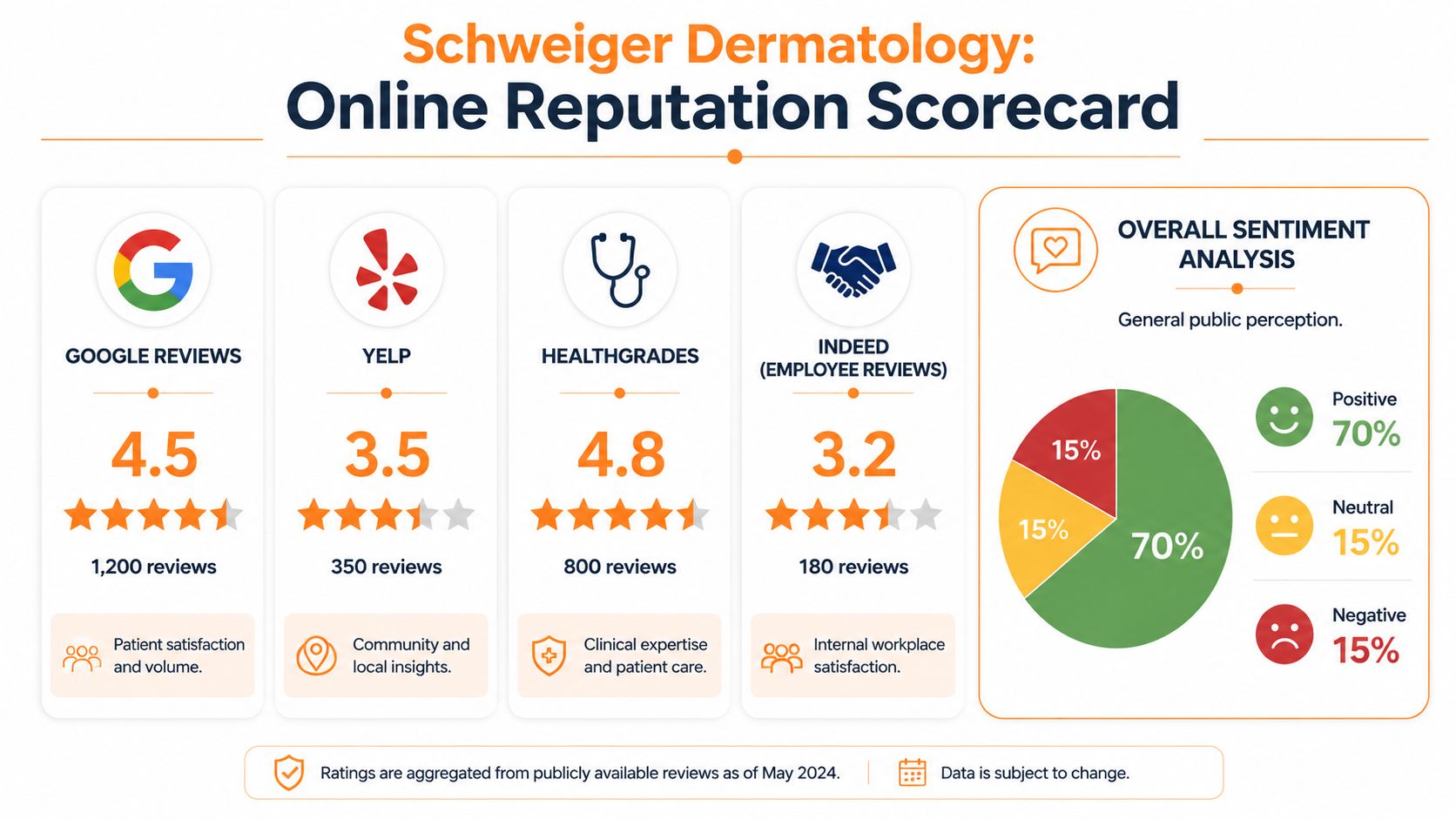
What the praise usually points to
Schweiger's brand messaging, as noted earlier, puts heavy emphasis on access, convenience, and broad service availability. That matters because review text often mirrors the promises patients saw before booking. When positive comments repeatedly mention quick appointments, efficient visits, or attentive clinicians, operators should read that as message-to-experience alignment.
That alignment has search value too. Review language that repeats service categories, locations, and visit details can strengthen local relevance signals. A useful reference on how to rank higher on Google Maps explains why specific, service-rich review text tends to outperform generic praise in local search.
What the criticism usually points to
The more instructive signals sit inside complaints. In large practices, criticism about bedside manner may reflect an individual clinician. Criticism about phones, scheduling, billing, or check-in almost always points to a system issue. Those problems usually come from staffing ratios, unclear ownership between central and local teams, weak pre-visit communication, or incentives that favor throughput over clarity.
Employer-review language can be especially useful here, even without treating every comment as verified fact. If staff describe high-volume pressure, corporate rigidity, or inconsistent support, managers should compare those themes against patient complaints by office. That cross-read helps separate isolated dissatisfaction from repeatable operating failure.
| Review pattern | Likely operating issue |
|---|---|
| Praise for fast access | Capacity management and scheduling are working in that location |
| Mixed staff sentiment | Manager quality or workload distribution varies by team |
| Complaints about billing or front desk | The service failure is process-based, not purely provider-based |
| Strong brand average with uneven local comments | Central reputation is masking office-level conversion risk |
The practical lesson is straightforward. Brand reputation attracts the click. Local execution wins or loses the appointment.
For practice leaders, Schweiger's public profile is less a verdict than an operating map. It shows where scale helps, where standardization breaks down, and why aggregated ratings should never be the only scorecard. Teams that want a broader framework for monitoring those signals can use this practical guide to online reputation to connect reviews, search visibility, and response discipline into one management process.
How Reviews Impact Your Google Maps Ranking
A regional practice can look strong at the brand level and still lose local visibility office by office. That is the operating lesson in Schweiger's review footprint.
For Google Maps, every location competes on three familiar factors: proximity, relevance, and prominence. Proximity depends on where the search happens. Relevance depends on how clearly the profile explains services and specialties. Prominence reflects how established that office appears across the web, including review volume, review recency, response activity, and the consistency of its business data.
Reviews matter because they affect two of those inputs at once. A steady stream of recent feedback strengthens prominence. Patient language can also reinforce relevance when reviews mention terms like acne, skin cancer screening, eczema, Mohs surgery, or a neighborhood name. For a multi-location group, that makes review operations part of local SEO, not just patient relations.
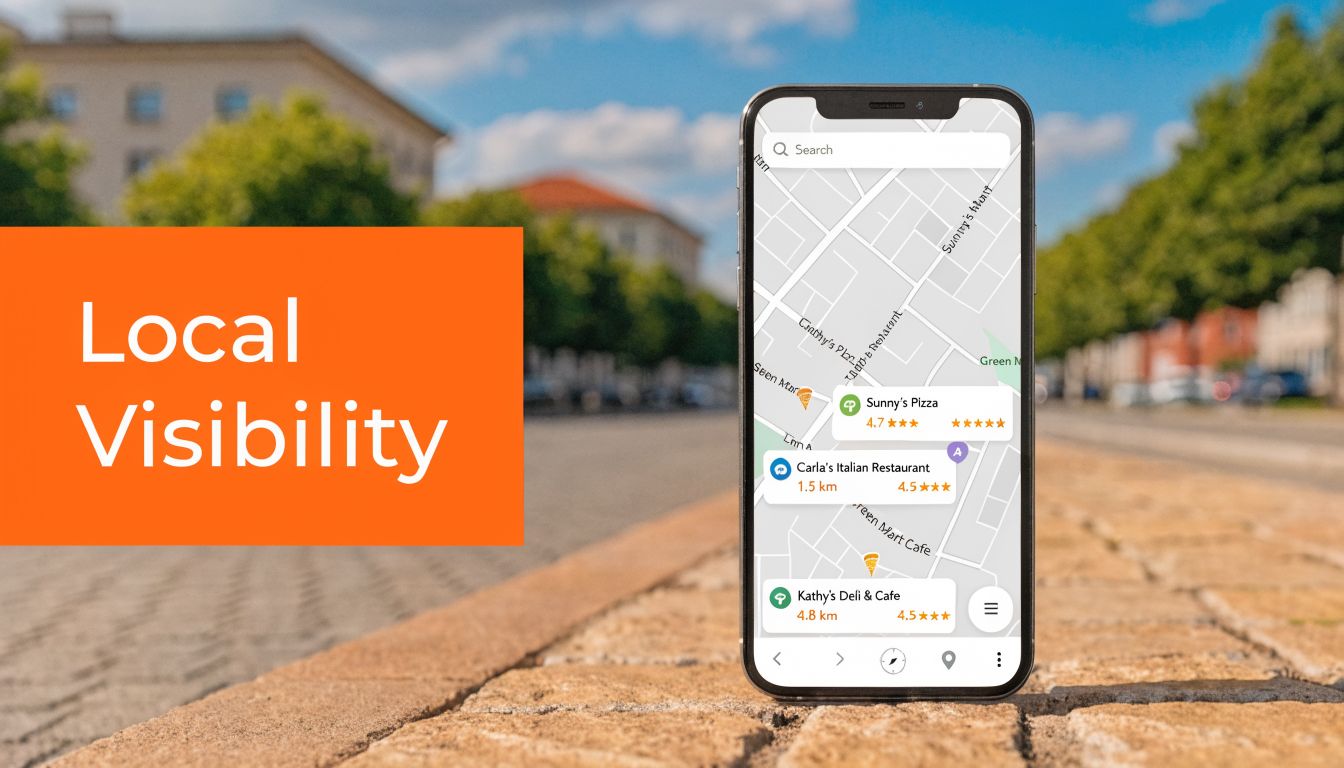
What Schweiger shows about review distribution
Use one source of truth for footprint data. Schweiger's own website describes the organization as having more than 60 offices across New York, New Jersey, and Pennsylvania. For practice managers, the exact count matters less than the structural issue that comes with scale. Reviews rarely distribute evenly across a network.
That uneven spread creates a common Maps problem. The parent brand may have strong name recognition, but Google ranks individual listings. If one office earns fresh, detailed reviews every week and another goes quiet for months, the weaker location can lose visibility even though both operate under the same brand and standards.
Operators often misread the signal. The risk is not only a low average star rating. It is sparse review activity at the listing level, especially in competitive metros where several dermatology groups are targeting the same service categories and ZIP codes.
A practical Google Business Profile checklist
Audit each location as its own local entity.
- Verify core business data: make sure the business name, address, phone number, hours, and appointment URL match your live website and major citations.
- Clarify service relevance: list services in plain language, such as acne treatment, psoriasis care, skin cancer checks, Mohs surgery, pediatric dermatology, or cosmetic dermatology where appropriate.
- Strengthen category signals: confirm the primary category fits the office's main offering, then add secondary categories only when they reflect actual services.
- Use the Q&A section well: add common operational questions about parking, referrals, insurance acceptance, and whether same-day visits are ever available.
- Respond consistently: keep replies timely and HIPAA-aware so the profile shows active management.
- Refresh photos: include exterior signage, reception, treatment rooms, and provider images that help patients recognize the office.
- Track bookings properly: add UTM parameters to the main appointment link so each location's GBP traffic can be measured separately.
If your team needs context on off-page signals beyond reviews, this explanation of external factors in search engine rankings is a useful complement. If the immediate goal is stronger map visibility by office, this guide on how to rank higher on Google Maps gives a practical framework.
How to tell whether reviews are improving visibility
Star rating alone is a poor operating metric. A better dashboard tracks review volume by location, the age of the most recent review, response time, Google Business Profile calls, website clicks, direction requests, and completed bookings from GBP traffic.
One metric deserves more attention than it usually gets. Review recency often separates active listings from neglected ones, especially for locations with similar categories, similar websites, and similar distance to the searcher.
Use a tagged booking URL on every listing. A format like utm_source=google&utm_medium=organic&utm_campaign=gbp_[location] lets regional managers compare offices directly and see whether stronger review activity correlates with more calls, more form fills, and more scheduled visits.
How to Assess Patient Review Credibility and Intent
A regional manager opens Monday's review report and sees three one-star posts tied to the same office. One complains about a rushed visit, one about an insurance surprise, and one about "terrible service" with no detail. Treating those as one problem is how multi-location groups waste time and miss the fix.
Schweiger is a useful case because scale changes how review analysis should work. In a single-office practice, leadership can often infer what happened from memory. In a large dermatology group, that approach breaks down. Review credibility has to be assessed with a repeatable method, then routed to the team that can correct the issue.
The first step is separating sentiment from signal. Public review patterns tied to Schweiger point to the same categories that matter in many specialty practices: wait times, billing confusion, front-desk interactions, and variation from one office to another. Those themes are more useful than raw star averages because they map to operating systems, not just patient emotion.
A practical triage model
Use three review types.
Experience reviews focus on interpersonal care. They usually mention bedside manner, whether the provider listened, whether the patient felt rushed, or how staff treated them during the visit.
Process reviews point to workflow failures. Common examples include scheduling errors, referral or insurance confusion, rescheduling, long waits, paperwork friction, checkout problems, and billing disputes.
Expectation-gap reviews reflect a mismatch between what the patient thought would happen and what the practice delivered. That often starts before the appointment, in call-center language, website copy, appointment reminders, or pre-visit instructions.
This classification changes who owns the response. Experience issues usually belong to the clinician leader or office manager. Process issues often belong to front desk, billing, or centralized operations. Expectation gaps often start with marketing, intake, or patient communications.
Questions to ask before you act
Before escalating a review, score it against a short credibility screen:
- Specificity: Does the reviewer describe a concrete event, timeline, staff interaction, or billing issue?
- Recency: Is the complaint recent enough to reflect the current team and workflow?
- Repeat pattern: Have similar comments appeared for the same location or the same journey stage?
- Location clarity: Is the review clearly tied to one office, or is it too vague for local action?
- Operational value: Can a manager test or verify the complaint inside scheduling, call logs, billing records, or front-desk processes?
A vague negative review still affects reputation, but it should not carry the same operational weight as a detailed complaint that matches a pattern already visible at that office.
One sentence matters here. Written reviews are often better diagnostic tools than star ratings because they show where the patient journey broke.
For larger groups, the best next step is review tagging by journey stage: pre-visit, check-in, clinical encounter, checkout, billing, and follow-up. Once those tags are applied consistently, location leaders can compare offices on failure type, not just volume of complaints. A simple system for tracking customer feedback across those touchpoints makes that comparison easier to maintain.
The non-obvious lesson from Schweiger's reputation footprint is that credibility and intent are different questions. A review can be emotionally charged and still credible. It can also be detailed but aimed at the wrong target, such as blaming a provider for a billing policy set centrally. Practice managers who separate those two variables make faster decisions, assign accountability more accurately, and avoid the common mistake of treating every negative review as a brand problem instead of a process clue.
HIPAA-Aware Templates for Review Management
Healthcare practices don't need more generic scripts. They need language the front desk can send and responses leadership can approve without risking PHI, which means Protected Health Information.
SMS review request script
Send this soon after the visit, once the patient has completed checkout.
Hi [First Name], thanks for visiting [Practice Name] today. If you'd like to share feedback about your experience, you can leave a review here: [Review Link]
We appreciate your time and use feedback to improve care and service at our [City] office.
Why it works: it is brief, direct, and avoids discussing diagnosis, treatment, or any personal health detail.
Email review request script
Subject: Thanks for visiting [Practice Name]
Hi [First Name],
Thank you for choosing [Practice Name]. We value your feedback and would appreciate a quick review about your visit to our [Neighborhood] location.
Leave a review here: [Review Link]
If there's anything we could have handled better, you can also reply to this email so our team can follow up directly.
Thank you,
[Practice Name]
Positive review response template
Use this when the review is favorable, but keep it general.
Thank you for your kind feedback. We appreciate you taking the time to share your experience with our team. Your comments mean a lot to our staff, and we look forward to continuing to provide a smooth, professional visit experience.
Don't confirm the reviewer was treated for a specific condition. Don't reference dates of service, treatment plans, or insurance details.
A lot of teams now use AI-assisted drafting, but the final reviewer should still be a trained human. If your group is evaluating systems for compliant outreach and response workflows, this overview of a HIPAA-compliant messaging platform is worth reviewing.
Negative review response template
This one should de-escalate, not argue.
Thank you for sharing your feedback. We're sorry to hear that your experience did not meet expectations. Because we want to protect privacy, we can't address specific details here. Please contact our office manager at [Phone] or [Email] so we can review your concerns directly and work toward a resolution.
A short training example helps teams understand tone before they start responding at scale.
Internal guardrails for healthcare teams
- Avoid PHI: never mention diagnosis, procedure type, medications, or appointment dates.
- Route disputes properly: billing and service recovery should have named owners.
- Use templates as starting points: don't publish robotic replies to every review.
- Escalate sensitive cases: threats, legal claims, and discrimination allegations should move to leadership immediately.
Keep public responses short. Save investigation and resolution for private channels.
Your 7-Day Plan to Launch a Review Program
A regional practice adds locations faster than it adds review discipline. Within a few months, one office is collecting steady feedback, another has an outdated Google Business Profile, and a third is sending patients to the wrong review link. The brand average still looks acceptable, but the local experience is inconsistent. That is the operating risk large groups should study in Schweiger's reputation footprint.
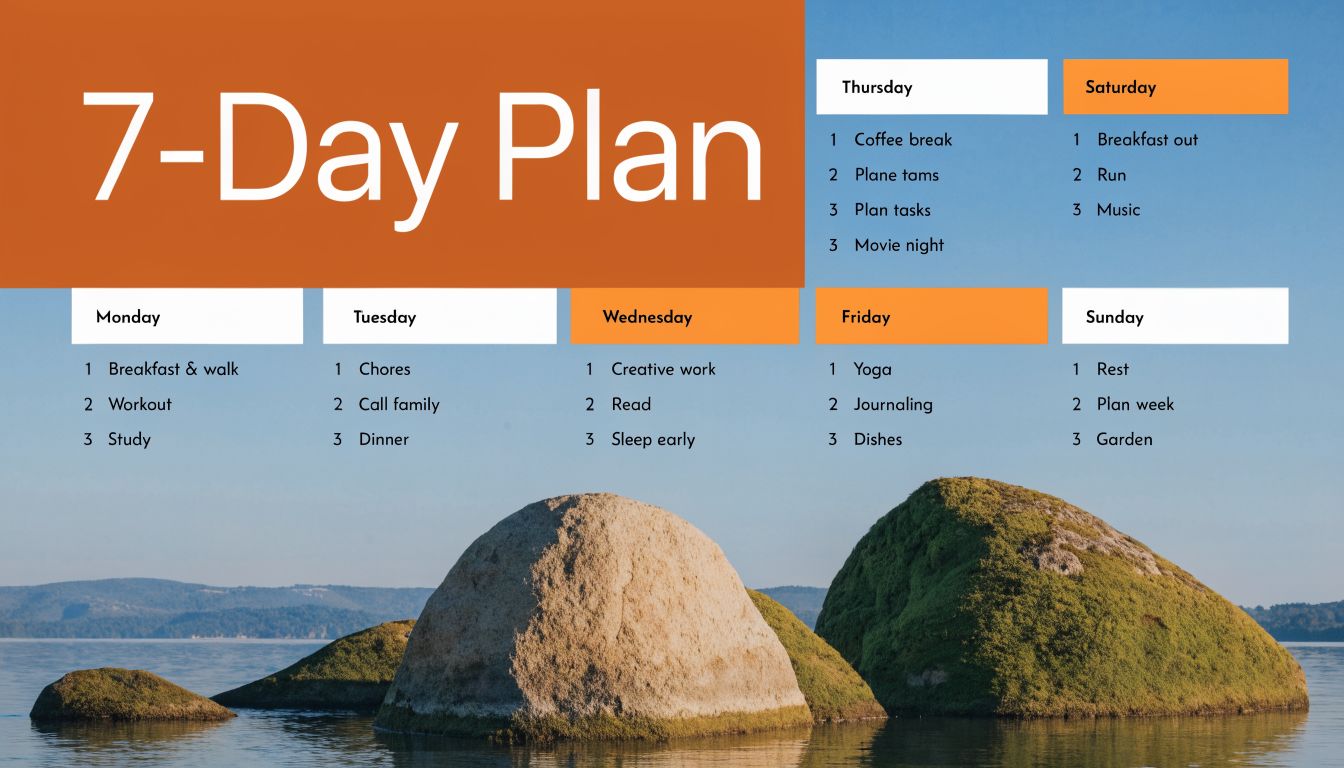
A review program works only if it is built at the location level and governed at the group level. The seven-day rollout below is designed for practice managers who need both.
Day-by-day launch checklist
Day 1: Assign local and central ownership
Give each office one accountable operator, usually the practice manager, and give the group one policy owner. Local teams control execution. Central leadership sets standards for timing, response rules, and escalation paths.
Day 2: Standardize review request links by office
Create one direct request link per location and label it clearly in your internal systems. Errors here distort reporting and damage trust because patients may leave feedback for the wrong office. If your staff needs a clear setup process, use this guide on how to request a review on Google.
Day 3: Approve scripts and train for compliance
Finalize one SMS, one email, and two response templates. Then train front-desk and call-center teams on approved language, opt-in rules, and privacy limits. In healthcare, a script is an operational control, not just a marketing asset.
Day 4: Audit each Google Business Profile
Check hours, categories, service descriptions, photos, and booking URLs. Add UTM tags to appointment links so each listing can be measured separately. Without clean profile data, review gains are harder to convert into calls and bookings.
Day 5: Trigger requests from the care workflow
Tie review outreach to a repeatable moment such as checkout, visit completion, or post-appointment follow-up. Staff memory is unreliable, especially across multiple offices. Automated triggers usually outperform manual reminders because they reduce variation between locations.
Day 6: Set response SLAs and escalation rules
Define who answers positive reviews, who handles service complaints, and how quickly each category should be addressed. Billing disputes, legal threats, and discrimination allegations should move into a private escalation path immediately.
Day 7: Build a simple location dashboard
Track review count, latest review date, average rating trend, response status, GBP clicks, calls, and bookings. A network-wide average can hide weak offices. Managers need a view that makes local underperformance visible.
Measurement targets that operators can use
Strong review operations focus less on vanity metrics and more on controllable patterns.
- Review volume: set a target for each office based on patient volume, specialty mix, and staff capacity.
- Recency: every location should receive fresh feedback on a regular cadence so the listing does not look inactive.
- Response time: choose a response window your team can maintain every week, not just during audits.
- Rating trend: monitor movement by office over time instead of relying on a single group average.
- GBP actions: measure calls, website clicks, direction requests, and bookings from tagged links.
- Conversion to appointments: compare profile traffic with completed bookings so review work is tied to demand generation.
UTM tracking example
Use structured tags on appointment links to compare offices cleanly.
- Source: google
- Medium: organic
- Campaign: gbp_[location]
- Content: booking_button
That setup helps a multi-location group test a useful question: does the office with stronger review recency also produce more appointment activity from its listing? Once you can answer that by location, review management stops being a brand exercise and becomes an operating system.
Healthcare Reputation Management FAQs
Should we respond to every review
Yes, if your team can do it consistently and safely. Positive reviews reinforce trust. Negative reviews show prospects that you listen and follow up.
What if a review contains factual errors
Don't argue in public. Respond briefly, protect privacy, and invite the reviewer into a private resolution channel.
Is a brand average enough for a multi-location practice
No. Patients choose a specific office. Track and manage reviews at the location level.
Can AI help write review responses
Yes, as a drafting tool. A human should approve healthcare responses before posting, especially when the review references care, billing, or conflict.
What's more important, star rating or recency
Both matter, but recency often changes how trustworthy a listing feels to new searchers. A strong old profile can still look inactive.
How do we handle reviews that aren't from actual patients
Document the issue, check the platform's reporting options, and avoid sharing private details while disputing it.
What should practice managers watch most closely
Watch repeated complaints about the same stage of the patient journey. That's where reviews stop being reputation noise and start becoming operational evidence.
If you want help building a disciplined, location-by-location review program, Reviews To The Top supports healthcare and multi-location operators with month-to-month guidance, review workflows, profile optimization, and response governance. If you'd like a practical next step, you can book a strategy call and see how to connect reviews to calls, bookings, and local visibility without adding more work to the front desk.