A customer in [City] searches “HVAC repair near me,” sees two similar businesses, and clicks the one with stronger recent reviews. That decision happens before your website, before your sales script, and often before a phone call. Reviews by Google matter because they shape local visibility and directly influence calls, messages, bookings, and tours.
Your Guide to Reviews by Google
A buyer compares two local businesses in Google, sees one profile with a steady stream of recent feedback and thoughtful replies, and chooses that company before visiting a website. That is the operating reality for local brands. Reviews by Google sit at the intersection of visibility, trust, and conversion.
For single-location operators, that means reviews influence who gets the call. For multi-location brands, the impact of review management is greater. Review management affects brand consistency, local search performance, close rates, and how clearly each location shows up in AI-assisted discovery. A weak review process creates uneven results market by market. A disciplined one gives leadership something more valuable: a repeatable growth system.
Google remains the center of review attention. As of 2025, it accounts for roughly 57 to 58 percent of online reviews, 81 percent of consumers check Google reviews first, and stronger review volume and freshness are associated with higher conversion and revenue performance, according to WiserReview’s Google review statistics.
Reviews should be managed like an operational channel, not a side task delegated when someone has time. Teams that treat reviews seriously build clear request workflows, response standards, location-level accountability, and reporting tied to booked jobs, tours, or revenue. That is where review strategy starts to produce measurable business value instead of vanity metrics.
A broader online reputation management process helps connect reviews to listings accuracy, response handling, escalation rules, and brand protection across every location.
Key Facts
- Google is the primary review platform buyers check before contacting many local businesses.
- Recent reviews and active responses strengthen trust at the moment a customer is deciding.
- Review strategy now affects both traditional local SEO and AI-generated business recommendations.
- Multi-location companies need shared standards, location-level execution, and centralized reporting.
- The strongest programs tie review activity to outcomes like calls, bookings, close rate, and revenue.
Practical rule: Build review collection and response into daily frontline operations, then measure it like any other revenue channel.
What Are Google Reviews and How Do They Influence Customers?
Google Reviews are customer ratings and written feedback shown on a business’s Google Business Profile. They appear where high-intent buyers are already looking, including Google Search, Google Maps, the local pack, and the knowledge panel.
That visibility changes customer behavior fast. A homeowner in [Neighborhood] looking for “plumber near me” can compare star rating, review count, recent comments, and whether the business replies. In many categories, that’s enough to decide who gets the call.
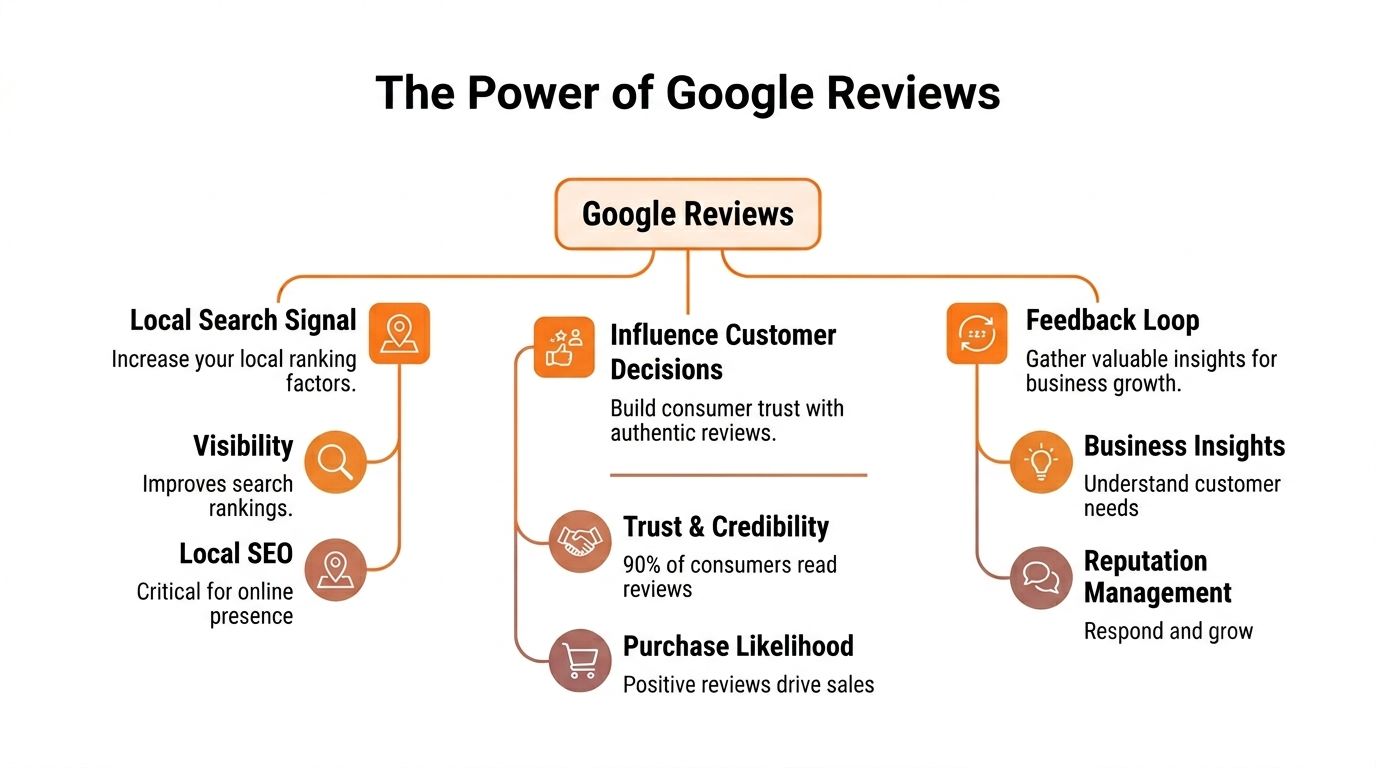
How Google uses proximity relevance and prominence
Google’s local system is easiest to understand through three factors.
- Proximity means how close your business is to the searcher or the place named in the query.
- Relevance means how well your profile and review content match what the person wants.
- Prominence means how established and trusted your business appears online.
Consider a librarian helping someone find a book.
- Proximity is the shelf closest to where the person is standing.
- Relevance is whether the book is about the topic they asked for.
- Prominence is whether many readers and references point to that book as useful.
Reviews affect the last two heavily. They add service language, customer sentiment, and trust signals that help Google decide whether your business fits the search.
Where customers see reviews by google
A buyer usually encounters reviews in a few places before visiting your site.
| Surface | What the customer sees | Why it matters |
|---|---|---|
| Local Pack | Star rating, review count, business name, map placement | Drives first click and first call |
| Knowledge Panel | Ratings, written comments, owner responses, photos | Builds trust without a site visit |
| Google Maps | Review feed, directions, hours, service context | Captures high-intent “near me” searches |
Operationally, reviews aren’t just social proof. They’re part of your storefront. That’s why customer feedback is tied so closely to local discovery and conversion behavior, as discussed in this guide on why customer reviews are important.
The Impact of Reviews on Local SEO and AI Search
Most operators focus on the star rating. Google pays attention to that, but the language inside reviews carries just as much practical value.
When customers describe specific services, staff interactions, speed, and outcomes, Google can connect those details to the searches you want to rank for. That matters for traditional local SEO and for AI-generated search experiences.
Why review content matters more than commonly recognized
Google’s algorithm uses AI-powered sentiment analysis and contextual keyword understanding. Reviews that mention targeted services such as “excellent HVAC repair” improve semantic relevance, and businesses that respond to 90%+ of reviews within 24-48 hours see measurable uplift in AI-generated summaries and Local Pack appearances, according to Consumer Fusion’s analysis of the Google review algorithm.
That changes how you should think about review collection.
A generic review like “Great place” helps less than a natural review such as “Fast furnace repair in [City] on a cold weekend.” The second one gives Google more context about service type, urgency, and location relevance.
If you want a deeper primer on local intent and profile visibility, this overview of Google My Business is useful background.
Reviews and AI optimization
AIO means Artificial Intelligence Optimization. In practical terms, it’s the work of making your business easier for AI systems to understand, trust, and surface in conversational answers.
Reviews help because they create:
- Service-rich language that mirrors how customers search
- Fresh factual signals about what happened, where, and why it mattered
- Public trust indicators through owner replies and visible issue handling
This is one reason review management is no longer just a reputation task. It’s also a content asset for AI summaries, local recommendation engines, and “best [service] near me” style queries.
Reviews give Google and AI systems real-world language your own website often lacks.
What works and what doesn’t
What works
- Asking for reviews right after service completion
- Encouraging customers to mention the actual service they received
- Replying quickly with clear, human responses
- Keeping profile details accurate so review signals attach to the right location
What doesn’t
- Batch campaigns that create unnatural spikes
- Copy-paste owner responses across every location
- Over-optimized wording that sounds robotic
- Waiting weeks to answer complaints
If you want the short answer to the SEO question, yes, reviews support visibility. This guide on do Google reviews help SEO covers that relationship from a local search angle.
Your 7-Day Checklist to Launch a Review Program
Most review programs fail because nobody owns the workflow. The fix is simple. Build a short launch sprint, assign clear roles, and make requests part of post-service operations.
7-Day Review Program Launch Checklist
| Day | Task | Objective |
|---|---|---|
| Day 1 | Audit every Google Business Profile for correct name, address, phone, hours, primary category, services, and review link | Make sure requests point to the right profile and buyers see accurate info |
| Day 2 | Decide who asks for reviews at each location and when the ask happens | Remove ambiguity from the front line |
| Day 3 | Build your request system using SMS, email, CRM, or POS follow-up | Create a repeatable process instead of manual memory |
| Day 4 | Train staff on the exact script and when not to ask | Improve consistency and avoid awkward timing |
| Day 5 | Launch requests from one location or one service line first | Catch workflow issues before wider rollout |
| Day 6 | Monitor incoming reviews and respond quickly, especially to negatives | Show activity and protect trust |
| Day 7 | Review early patterns by location, service type, and staff handoff | Adjust the script, timing, and ownership |
How to make the checklist work in real life
A med spa manager might send the request after checkout. A dental office may send it after the patient leaves, once the appointment is completed and follow-up instructions are already delivered. An HVAC company may trigger the request after the technician closes the job in the field app.
Keep the ask tied to a moment when the customer has already received the value.
- Best timing: Right after a completed visit, service call, or resolved issue
- Best owner: The system sends it, but a staff member still introduces the ask
- Best path: One direct Google review link, no extra clicks
Staff guidance that prevents friction
Don’t tell staff to “get more reviews.” Give them one sentence to say and one trigger to use.
“If the customer sounds happy, that’s the moment to mention the review text and let the system send the link.”
For request mechanics, routing, and examples, this resource on how to request Google reviews is a strong operational reference.
A simple rollout beats a complicated one. Start with one channel, one script, one owner, and one response standard. Then expand across locations.
Essential Templates for Requesting and Responding to Reviews
Templates help teams move faster, but only if they sound natural. The best scripts are short, polite, and easy to send from the systems you already use.
Review request templates for a dental practice
SMS template
Hi [First Name], thanks for visiting [Practice Name] today. If you’d share a quick Google review about your experience, it would really help other patients in [City] find us. Review here: [Direct Google Review Link]
Email template
Subject: Thanks for visiting [Practice Name]
Hi [First Name],
Thank you for choosing [Practice Name] for your care today. If you have a minute, we’d appreciate a Google review about your visit. Your feedback helps other patients in [City] feel confident when choosing a dental office.
Leave a review here: [Direct Google Review Link]
Thank you,
[Practice Name]
Keep healthcare responses HIPAA-aware. Don’t confirm treatment details, diagnoses, or anything that could reveal protected health information.
Review response templates
Positive review response
Thank you, [First Name]. We appreciate your kind words about our team and are glad you had a positive experience with [service type] at [Business Name]. Thanks for trusting us in [City].
Negative review response
Thank you for your feedback, [First Name]. We’re sorry your experience didn’t meet expectations. We take concerns like this seriously and would like to learn more so we can address it appropriately. Please contact us at [phone/email] and ask for [manager name].
Small edits that improve performance
- Use the service name when appropriate, but keep it human.
- Mention the location naturally for local relevance.
- Avoid canned wording that every location uses word for word.
If your team needs more variations, this library of customer service response templates is helpful for building brand-safe replies.
Measuring What Matters in Your Review Strategy
A review program gets cut fast when leadership sees it as a reputation task instead of a revenue system. The fix is measurement. Every location should track a tight set of numbers that connect review activity to visibility, conversion, and booked business.
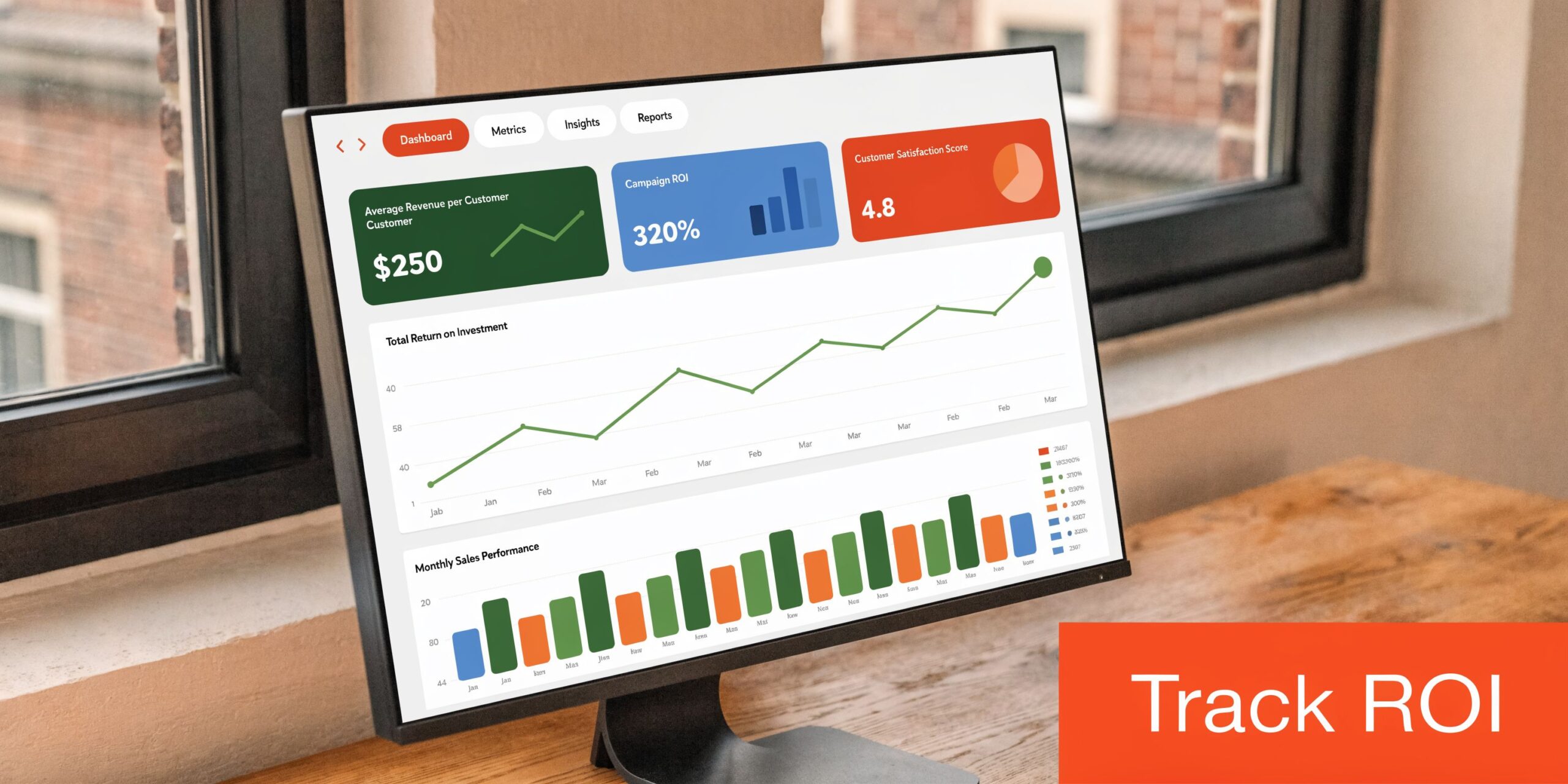
The KPIs worth tracking
Start with six metrics that an operator can act on.
| KPI | What to watch | Practical target |
|---|---|---|
| Star rating | Overall average by location | Aim for 4.5+ if your category can support it |
| Review volume | New reviews per month by location | Set a monthly goal by location and keep it steady |
| Review recency | How recently reviews were posted | Keep new reviews coming every month |
| Response time | Time from review posted to reply | Under 24 hours |
| Response rate | Share of reviews answered | Reply to all negative reviews and a strong share of positives |
| GBP actions | Calls, direction requests, website visits, bookings | Tie review work to lead activity |
These metrics work together. A location with a strong average rating but no recent reviews often converts worse than a location with a slightly lower score and consistent fresh feedback. A location that earns reviews but leaves them unanswered also gives up trust signals that influence both prospects and AI-generated business summaries.
The priority is trendline, not vanity. If review recency improves, response time stays tight, and GBP actions rise after that, the program is doing its job.
How to connect GBP activity to revenue
Use UTM parameters on the website link inside your Google Business Profile so profile traffic is visible in analytics by location. Then map that traffic to the actions your business cares about.
Track these paths:
- GBP to call
- GBP to website
- GBP to booking page
- GBP to contact form
- GBP to directions request
For service brands, I also recommend one more layer. Separate branded from non-branded search demand where possible, then compare locations with stronger review recency and response discipline against locations that lag. That exposes whether reviews are just reflecting brand strength or actively improving local conversion.
If you run multiple locations, build one scorecard that combines reputation metrics and commercial metrics. Reviews earned, median response time, GBP actions, leads, and booked jobs should sit in the same report. That is how review management moves from a marketing task to an operating discipline.
What to review every month
Monthly review meetings should happen at the location level first, then roll up to the region or brand.
Look for patterns such as:
- Locations that generate fresh reviews consistently
- Services mentioned most often in review text
- Managers who reply on time and managers who do not
- Changes in calls, bookings, and direction requests after review volume or recency improves
- Language customers use repeatedly, which can shape local SEO targets and AIO visibility
That last point matters more now. Reviews do not just influence human buyers scrolling a profile. They also feed the language ecosystem that AI search tools use to summarize reputation, service quality, and category relevance. If customers keep mentioning "same-day crowns," "weekend emergency plumbing," or "fast insurance claim help," that language can strengthen both traditional local search performance and AI-driven discovery.
A disciplined review program should answer a simple question every month. Which locations are getting more trust, more qualified actions, and more booked revenue from the review system you built.
Managing Reviews at Scale for Multi-Location Businesses
A single-location owner can manage reviews in the gaps between other tasks. A regional operator can’t. Once you have multiple clinics, stores, or territories, inconsistent review handling becomes a governance problem.
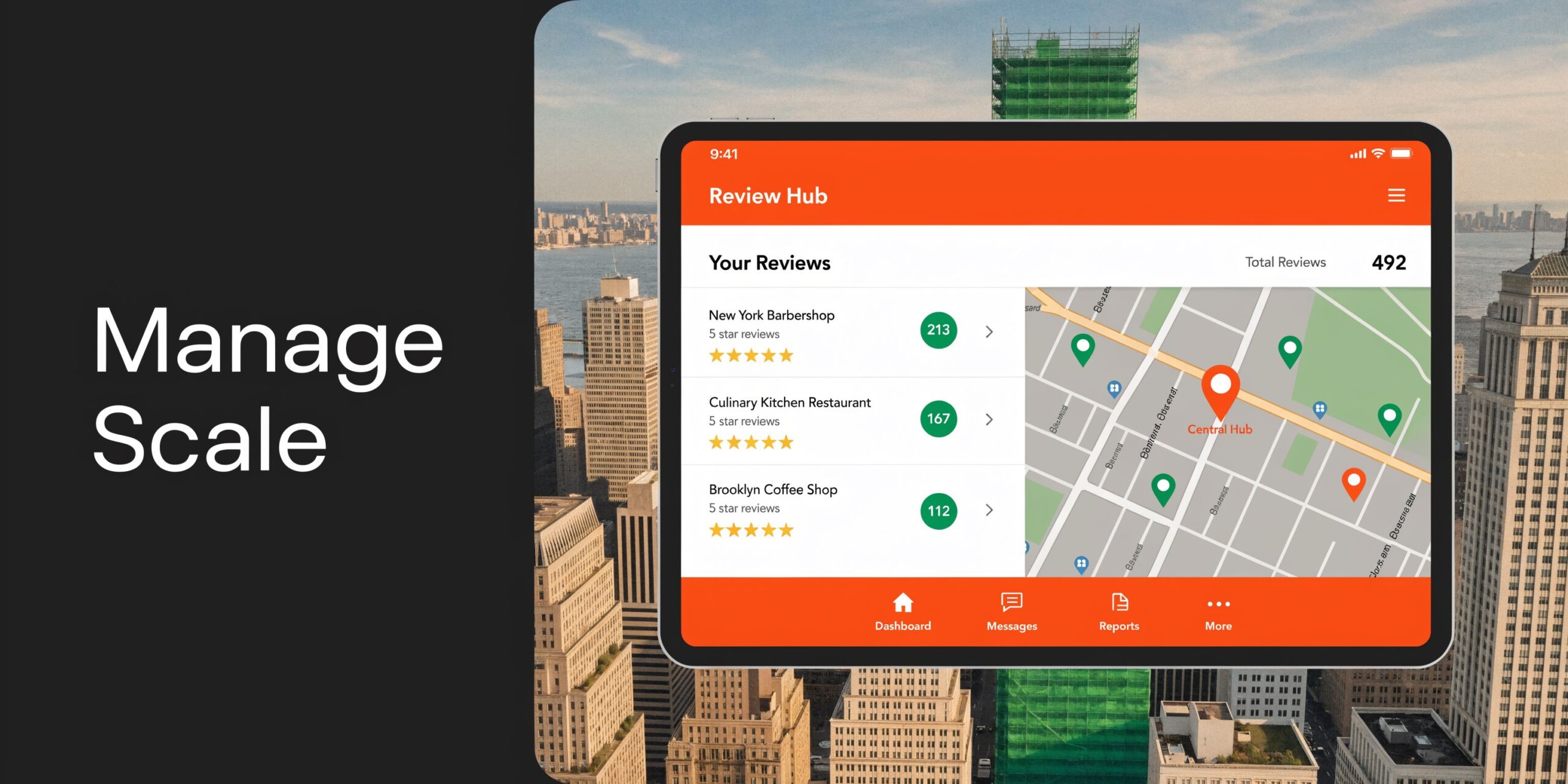
What breaks when locations manage reviews alone
Local managers usually mean well. The issue is variance.
One vet clinic replies thoughtfully. Another ignores reviews for weeks. A third location uses language that doesn’t match brand standards. A senior living location may accidentally answer a sensitive complaint too casually. That inconsistency creates risk.
The fix is a centralized model with room for local context.
The operating model that scales
Multi-location brands need clear rules in four areas.
- Permissions: Corporate should control profile ownership and access levels.
- Templates: Give each location approved response frameworks, not blank pages.
- Escalations: Route legal, safety, discrimination, or healthcare-sensitive issues to the right team fast.
- Reporting: Review performance by region, brand, and location every month.
For example, a dental group may let office managers respond to positive reviews but require escalation on billing disputes. An HVAC franchise may allow branch-level replies but require regional review on safety complaints.
What to automate and what to keep human
Automate the repetitive work.
- Review requests after completed appointments or service jobs
- Alerts when new reviews come in
- Draft responses for approval
- Reporting across all locations
Keep the judgment calls human.
- Sensitive complaints
- Reputation threats involving staff conduct
- Reviews that mention compliance or safety issues
- Anything that could affect healthcare privacy or housing neutrality
If you’re evaluating systems for centralized control, this overview of software reputation management covers the main workflow categories to look for.
A scalable review operation isn’t about removing local ownership. It’s about giving local teams a safe, fast process that corporate can effectively govern.
Common Pitfalls and Google Policy Essentials
A branch manager asks for reviews after every completed job. Another location only asks customers they know will leave five stars. Corporate offers a gift card during a slow month. None of those teams may think they are creating risk, but they are. Review programs usually break at the process level, and for multi-location brands, one bad habit can spread fast.
The biggest mistakes are predictable, which means they are preventable.
Mistakes that create risk fast
- Review gating: Ask all eligible customers, not just the happy ones.
- Incentives: Do not offer discounts, gifts, credits, or prize entries for reviews.
- Copy-paste replies: Use approved frameworks, but tailor each response to the actual issue.
- Profile sprawl: Resolve duplicate, outdated, or unclaimed profiles before pushing harder on review generation.
- Loose local execution: Do not let locations invent their own asks, timing, or response standards without oversight.
For regulated categories, the margin for error is smaller. Healthcare teams should stay HIPAA-aware and avoid confirming any patient relationship, visit, or treatment detail in a public response. Housing-related businesses should keep language Fair Housing neutral and avoid phrasing that could imply preference or exclusion.
These are policy and operations issues. They also affect ROI. If requests are uneven, responses are generic, or profiles are fractured, review volume may rise while conversion quality, local visibility, and trust stay flat. That is the trap. More reviews alone do not produce better performance.
Why legitimate reviews disappear
Sometimes a real review drops out of view even when no one broke the rules. That can happen after profile merges, spam-filter refreshes, data inconsistencies, or changes between how Google surfaces reviews in Search versus Maps.
Experts who work closely with Google Business Profile issues have documented many non-policy reasons for hidden or missing reviews, so teams should investigate the account setup before assuming a penalty or bad actor.
If reviews disappear, do this:
- Check for duplicate Google Business Profiles tied to the same location.
- Confirm your business name, address, and phone are consistent across core listings.
- Capture screenshots of the missing review and note the reviewer name and date.
- Compare what shows in Google Search and Google Maps.
- Escalate through Google Business Profile support with documentation.
One sentence matters here. A hidden review is often an operations problem before it is a policy problem.
Google Business Profile controls that protect review performance
Use this checklist to make sure reviews by google are attached to a profile that can rank, convert, and feed stronger signals into AI-driven discovery.
- Primary business data: Name, address, phone, hours, and website are accurate
- Categories: Primary and secondary categories align with the service offering
- Services: Core services are listed clearly for each location
- Photos: Recent, real images reflect the customer experience
- Messaging and contact paths: Calls, forms, and messages route to the right team
- Review link: Staff uses the correct direct review URL for that location
- Ownership and access: Brand leadership controls admins, managers, and transfers
This is the foundation layer. Clean profiles, policy-safe requests, and disciplined responses give multi-location brands a review system they can trust. They also improve how your locations are interpreted by search engines and AI answer systems that look for consistency, credibility, and recent customer proof.
Your Questions About Google Reviews Answered
A location gets a bad review at 8:12 a.m. By noon, the office manager wants it gone, the franchise team wants a response approved, and the owner wants to know whether this will hurt calls. Those are the right questions. They just need clear operating rules.
Can I delete a negative Google review
No. Businesses cannot remove reviews from their own Google Business Profile.
You can report a review that appears to violate Google’s policies, such as spam, off-topic content, harassment, or a review from someone who was never a real customer. If Google leaves it up, respond professionally and move on to the next action. For most brands, the bigger risk is no response, no process, and no record of recurring complaints across locations.
How many reviews do I need
There is no target number that fits every business.
What matters is review velocity and review coverage by location. A single office with 150 reviews and six months of silence often underperforms a competitor with recent, steady feedback. For multi-location businesses, the standard should be set per market, not across the brand as a whole. One strong flagship profile does not carry weaker locations.
Should I respond to positive reviews too
Yes. Replying to positive reviews is part of reputation operations, not just customer service etiquette.
A short, specific reply shows the profile is active and gives Google and AI answer systems more current business context to read. It also helps future customers see how the business communicates. Keep responses human, brief, and location-aware. Avoid copying the same sentence across every review, especially at scale.
Is it okay to offer incentives for reviews
No. Paying for reviews, offering discounts in exchange for reviews, or asking only happy customers to leave feedback creates compliance risk and weakens trust.
The right approach is simple. Ask every eligible customer through a consistent process, send the direct review link, and let the customer decide. That produces cleaner data and a review profile you can defend.
What if my star rating isn’t perfect
A perfect 5.0 is not the goal. Credibility is.
Many strong local brands convert well with a high but not flawless rating, especially when reviews are recent and responses are thoughtful. Buyers expect some variance. What hurts more is an old profile, unanswered complaints, or obvious operational issues repeated across multiple reviews.
What should I say when asking for a review
Keep it short and tied to the completed service.
Use a simple request, send one direct link, and ask while the experience is still fresh. Front desk teams, field staff, and call center agents should all use the same approved language. That is how review generation becomes a repeatable system instead of a staff-by-staff habit.
How fast should my team reply
Set a service-level standard.
For most local service brands, same-day replies are a strong benchmark for negative reviews. Positive reviews can follow on a scheduled cadence if volume is high, but they still need consistent coverage. Multi-location operators should assign ownership, escalation paths, and response windows before volume increases. Speed without control creates sloppy replies. Control without speed creates public silence.
Google reviews affect more than star ratings. They influence local visibility, conversion rates, and how AI systems interpret brand quality, service mix, and market-level consistency. The businesses that win treat reviews as an operating channel with clear ownership, clear reporting, and clear financial expectations.
If you want help building that system, Reviews To The Top offers month-to-month support for local and multi-location businesses that need stronger review flow, faster responses, cleaner profile management, and clearer reporting from Google Business Profile to calls and bookings. If you’re ready to tighten the process and grow with less guesswork, you can book a strategy call.