Good product review examples show local businesses how to turn customer feedback into conversions like calls, messages, and bookings. For busy operators in verticals from dental to HVAC, a steady stream of authentic, detailed reviews is critical for building the trust that convinces a potential customer to choose you over a competitor "near me." Understanding what makes a review effective is the first step to building a powerful online reputation.
Key Facts
- Local SEO Impact: Google's local search algorithm prioritizes businesses with high-quality, recent reviews. This is based on a model of Proximity (how close are you?), Relevance (do you offer what the searcher wants?), and Prominence (how reputable are you, largely based on reviews?).
- Conversion Driver: Over 90% of consumers read online reviews before visiting a local business. Positive reviews directly influence calls, form fills, and appointment bookings.
- Review Volume Matters: A consistent flow of new reviews signals to Google that your business is active and trustworthy. Aim for a steady stream, not just a one-time blast.
- Response is Required: Responding to all reviews (positive and negative) within 24 hours shows you value customer feedback and can increase customer loyalty.
- Specificity Builds Trust: Detailed reviews that mention specific services (e.g., "the Invisalign consultation," "the emergency AC repair") are more credible and helpful than generic praise.
Step 1: Learn From the Best Product Review Examples
Analyzing how major platforms gather and display feedback provides a blueprint for your own strategy. These examples showcase the key elements of reviews that build trust and drive action.
Amazon: Mastering the High-Volume Consumer Review
As the world's largest online marketplace, Amazon serves as an unparalleled library of consumer feedback. For businesses in any local service industry, from dental practices to automotive centers, it provides a masterclass in what constitutes a helpful, detailed, and trustworthy review. By analyzing its structure and features, you can extract powerful strategies for your own review generation and management efforts.
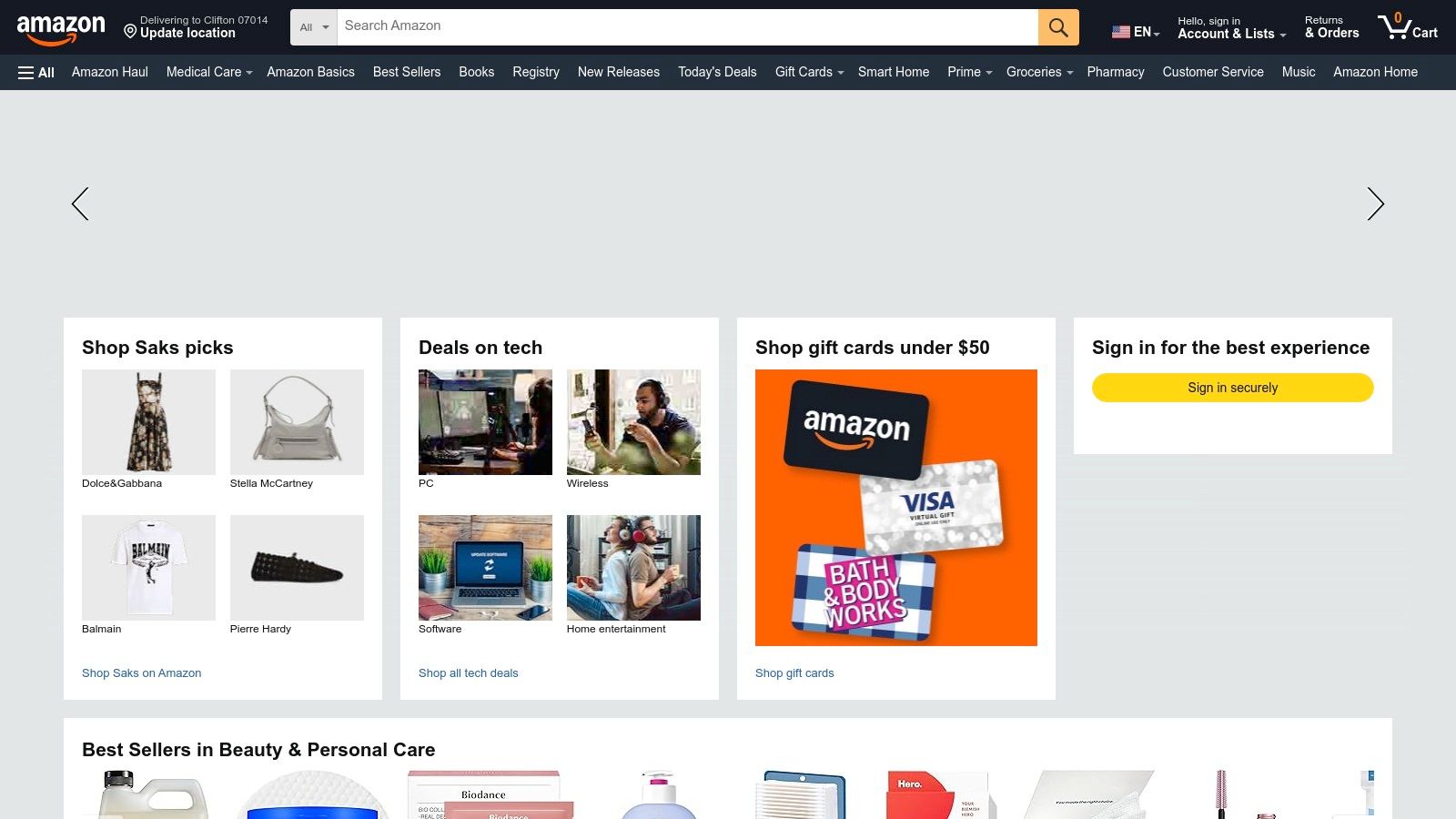
Amazon's review ecosystem is a treasure trove of good product review examples because it has solved the problem of organizing massive volumes of user-generated content. Its platform offers robust filtering, AI-powered summaries, and visual components that make reviews more digestible and useful for potential buyers. These are principles any service business can adapt to better showcase their own customer feedback.
Actionable Takeaway: Encourage customers to leave detailed, descriptive reviews. Prompt them with specific questions about their experience, like a med spa asking about the check-in process, the technician's professionalism, and post-treatment results. The core lesson from Amazon is to make your reviews easy to read, rich with detail, and trustworthy.
Best Buy: Excelling with Feature-Specific Feedback
Best Buy, a leader in consumer electronics, provides an exceptional model for how to structure reviews around specific product features and performance attributes. For service-based businesses like automotive centers or med spas, its platform offers a masterclass in breaking down a complex experience into understandable components. Analyzing Best Buy's review system reveals how to solicit and display more granular, useful feedback.
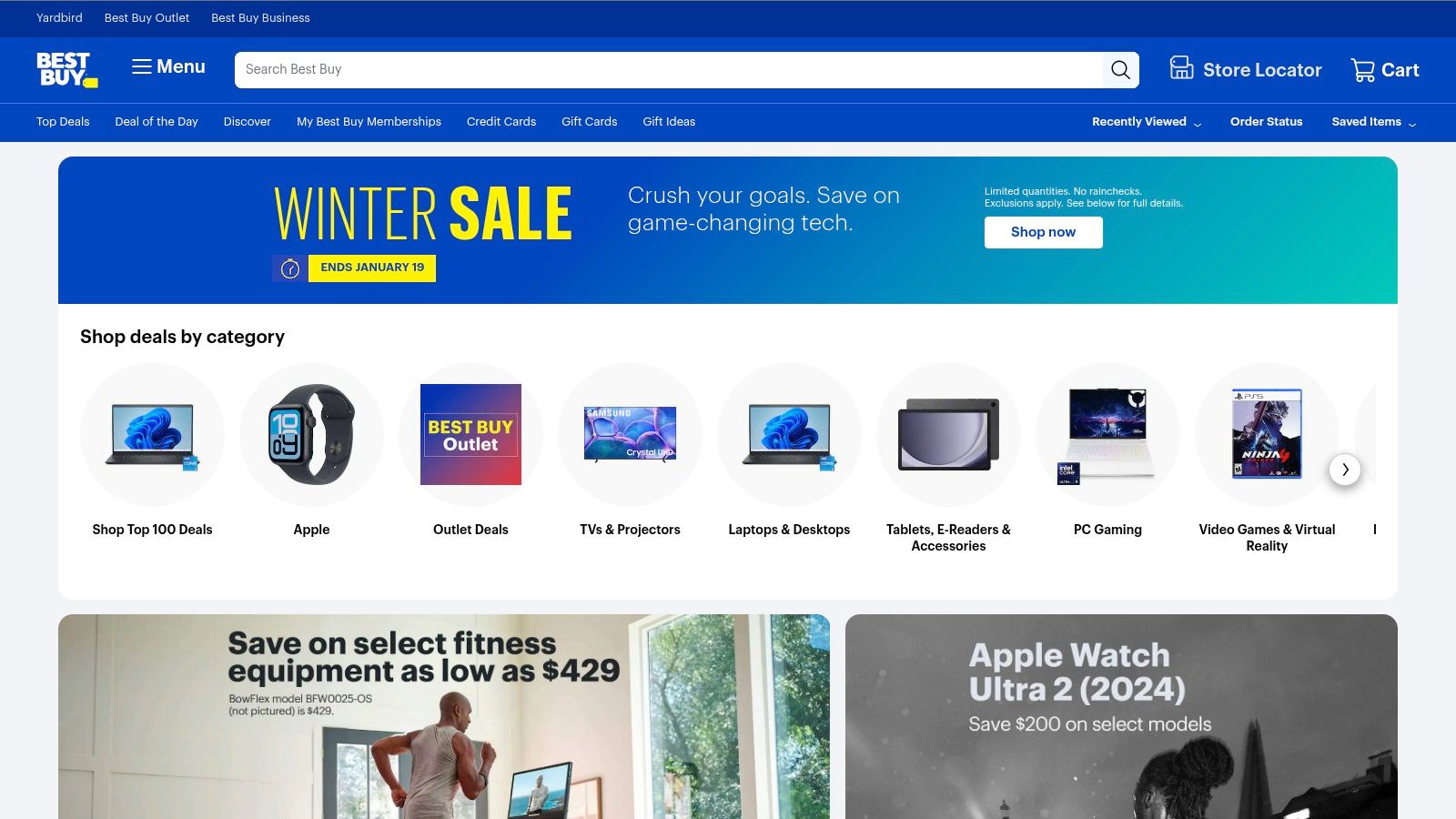
The platform is a prime source of good product review examples because it goes beyond a single star rating. Best Buy encourages customers to rate individual aspects like "Value," "Quality," and "Ease of Use," giving potential buyers a multi-dimensional view of the product. This approach helps translate a general feeling into specific, actionable insights, a technique any service business can adopt to highlight its strengths.
Actionable Takeaway: When requesting reviews, prompt clients with questions that target different parts of their experience. An HVAC company could ask a customer to comment on the technician's punctuality, the clarity of the pricing, and the effectiveness of the repair. The core lesson from Best Buy is to guide your customers toward providing detailed, feature-specific feedback.
Consumer Reports: The Blueprint for Authoritative, Criteria-Driven Reviews
While marketplaces like Amazon thrive on user opinion, Consumer Reports offers a fundamentally different and equally valuable perspective. It provides a masterclass in structuring authoritative, evidence-based reviews built on transparent testing and objective criteria. For local service businesses, it’s a blueprint for showcasing expertise and building trust not just through sentiment, but through substance.
Consumer Reports is an essential source for good product review examples because it teaches a critical lesson: the most credible reviews are often those that follow a clear, logical structure. This focus on objective analysis provides a powerful model for service businesses aiming to position themselves as experts in their field.
Actionable Takeaway: Educate your customers on how to evaluate your service. A vet clinic, for example, could create a guide on "5 Things to Look for in a Great Animal Hospital," explaining the criteria their team meets. The lesson from Consumer Reports is to build reviews on a foundation of expertise and transparency.
G2: The Blueprint for B2B and High-Consideration Service Reviews
G2 is a leading B2B software and services marketplace, but its true value for local businesses lies in its structured, professional review format. For services like specialized dental procedures or high-end aesthetic treatments where the client's decision is complex, G2 offers a masterclass in collecting feedback that addresses specific problems, solutions, and outcomes.
G2’s platform excels at generating good product review examples by prompting users for balanced, detailed feedback. It asks reviewers what they liked, what they disliked, and what business problems they solved, a structure that is perfectly suited for high-consideration local services. This "problem → solution → outcome" format helps potential customers see the tangible value of a service.
Actionable Takeaway: Frame your service as a solution. When requesting feedback, guide clients with targeted questions. A senior living community could ask a resident's family, "What were your biggest concerns when searching for a community, and how has our team helped address them?" The core lesson from G2 is to prompt customers to share their success stories.
Capterra: The Benchmark for Verified B2B Software Feedback
For service businesses that rely heavily on specialized software, from dental practice management to home services scheduling, Capterra offers a masterclass in structured, high-stakes feedback. Analyzing its platform reveals how to build trust and credibility through transparent review policies and detailed, role-specific feedback.
Capterra's ecosystem provides a wealth of good product review examples because its rigorous verification process and structured Q&A format ensure reviews are not just opinions but detailed accounts of user experience. These principles are directly applicable to local service businesses seeking to gather more substantive testimonials from their own clients.
Actionable Takeaway: Focus on verification and context. Encourage clients to share their role or reason for visiting, like "a busy parent needing a quick check-up" or "a homeowner getting a new HVAC system." The key lesson from Capterra is that transparency and structure turn simple feedback into a compelling asset.
Trustpilot: Leveraging Concise Reviews for Marketing Impact
Trustpilot is a global consumer review platform that specializes in building trust between businesses and their customers through transparent feedback. For local service businesses, from automotive shops to senior living communities, it offers a powerful case study in how to collect, display, and repurpose concise, service-oriented reviews to build social proof and drive conversions.
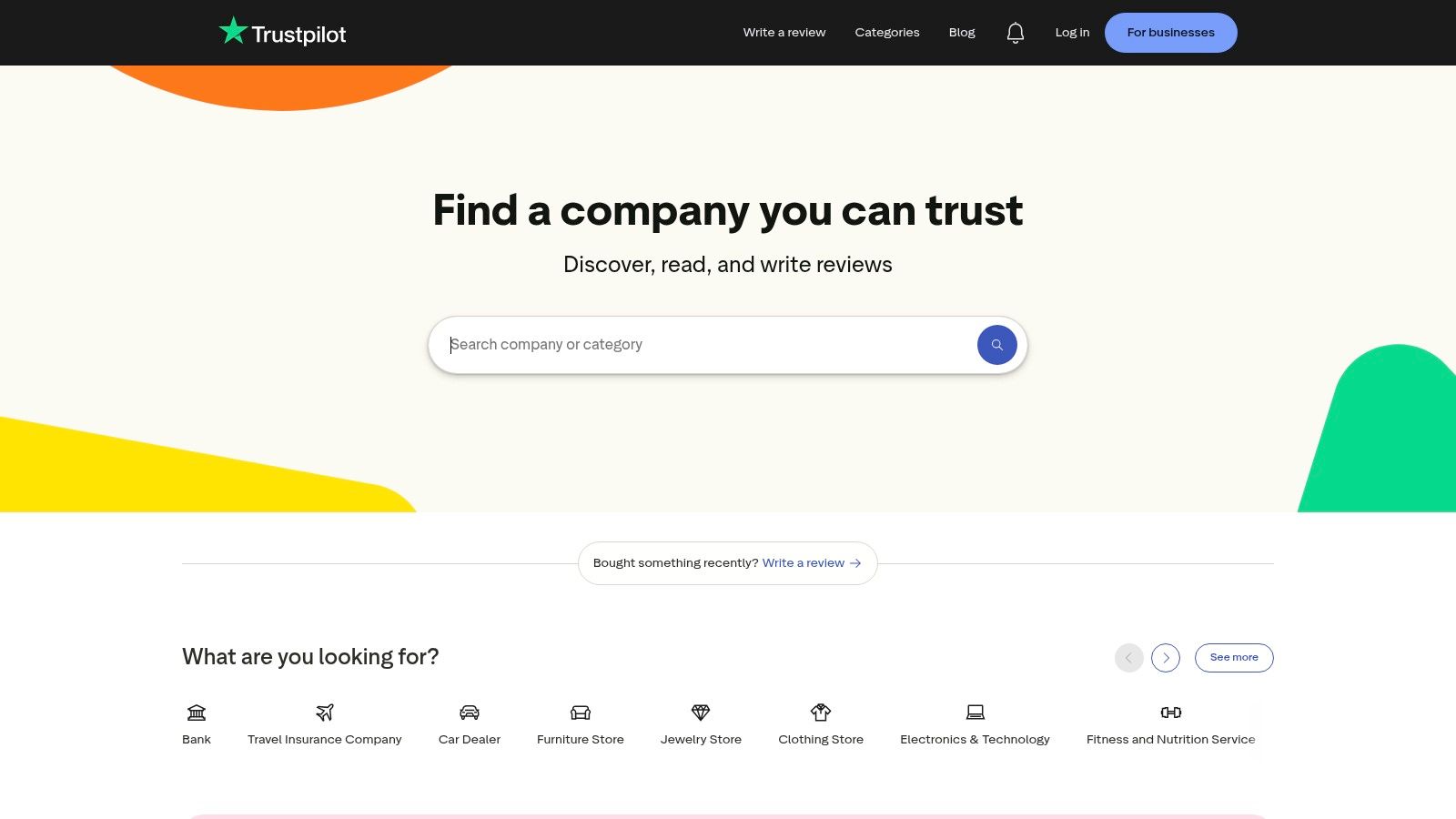
The platform is an excellent source of good product review examples because it excels at showcasing shorter, punchier feedback and provides businesses with tools to leverage these testimonials across their marketing channels. Its focus on review invitation systems demonstrates how to turn customer voice into a tangible marketing asset.
Actionable Takeaway: Actively integrate your review display strategy into your marketing. A dental practice can embed a widget showcasing its 4.9-star rating directly on its "New Patients" page. The core takeaway from Trustpilot is to make your reputation a visible, active part of your brand identity.
Birdeye: The All-in-One Platform for Local Service Businesses
Birdeye is an experience marketing platform where local businesses can manage their entire customer feedback lifecycle. For service-based businesses in healthcare, home services, or automotive, it provides a powerful look into how to proactively generate, monitor, and respond to reviews across hundreds of sites from a single dashboard.
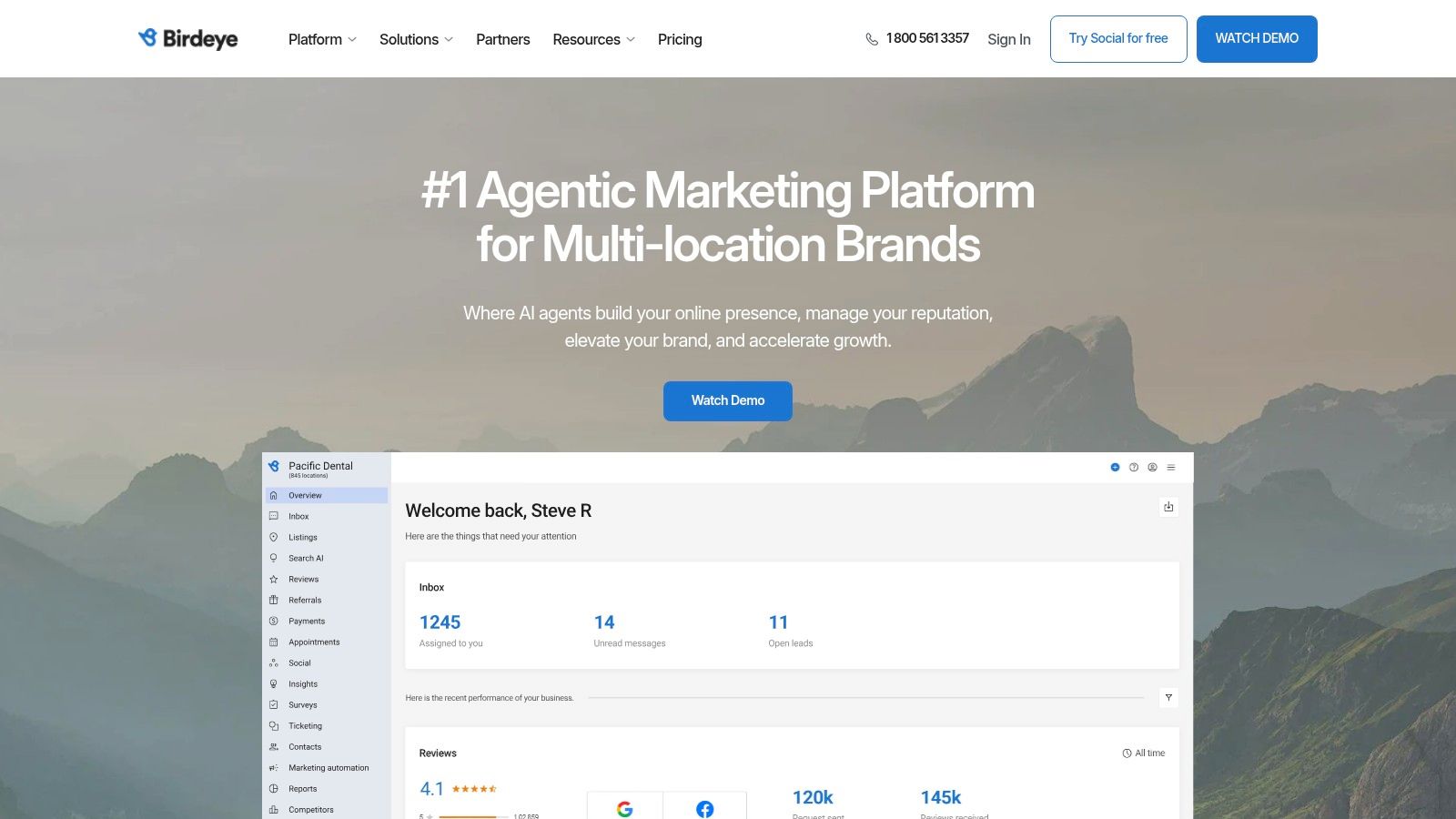
While consumers don't browse Birdeye directly, the platform is a prime source of good product review examples because it powers the review widgets and feeds seen on thousands of local business websites. Birdeye’s tools are purpose-built to help businesses solicit high-quality feedback, making it an excellent case study in online reputation management technology.
Actionable Takeaway: Centralize and automate your review process. Create a simple system for sending follow-up messages after every customer interaction, directing them to your most important review profiles. The lesson from Birdeye is to treat review management as a fundamental marketing function.
Step 2: Implement Your Review Generation Program
Now, let's turn these insights into action with practical templates and a clear launch plan.
Templates & Scripts
SMS Review Request Script (Med Spa Example):
Hi [Client Name], it's [Staff Name] from [Med Spa Name]. We loved seeing you today! Would you mind sharing your experience on Google? It helps others in [City] find us. Here’s the link: [Short Review Link]
Email Review Request Script (Dental Practice Example):
Subject: How was your visit to [Dental Practice Name]?
Hi [Patient Name],
Thank you for choosing us for your dental care. We strive to provide a 5-star experience for every patient in the [Neighborhood] area.
Would you take 60 seconds to share your feedback on Google? Your review helps us improve and allows others to learn about our practice.
[Click Here to Leave a Review]
We appreciate your time and trust in us.
Sincerely,
The Team at [Dental Practice Name]
Positive Review Response Template:
Hi [Customer Name], thank you so much for the wonderful 5-star review! We're thrilled to hear you had a great experience with [mention specific service/person, e.g., "Dr. Evans and our hygiene team"]. We appreciate you choosing us and look forward to seeing you at your next visit!
Negative Review Response Template:
Hi [Customer Name], thank you for bringing this to our attention. We are sorry to hear that your experience did not meet your expectations. Providing excellent service is our top priority, and we have clearly missed the mark here. We would appreciate the opportunity to discuss this further. Please call our practice manager, [Manager Name], at [Phone Number] at your convenience.
7-Day Launch Checklist for Your Review Program
- Day 1: Set Goals. Define your targets for review volume, star rating, and response time (see Measurement section below).
- Day 2: Optimize Your GBP. Ensure your Google Business Profile is fully updated with correct hours, services, photos, and categories.
- Day 3: Create Your Review Link. Generate a direct link for customers to leave a Google review. Use a URL shortener like bit.ly to make it easy for SMS.
- Day 4: Draft Your Templates. Finalize your SMS and email request scripts and your response templates.
- Day 5: Train Your Team. Explain the new process to your front-desk and service staff. Role-play how and when to ask for a review.
- Day 6: Integrate & Automate. Set up your practice management software or CRM to automatically send a review request 1-2 hours after a completed appointment.
- Day 7: Launch & Monitor. Activate your automated requests. Designate one person to monitor for new reviews and respond within 24 hours.
Step 3: Measure What Matters
To ensure your review program drives business growth, track these key performance indicators (KPIs).
- Review Volume: Aim for 5-10 new reviews per location per month to maintain recency.
- Star Rating: Target an average rating of 4.5 stars or higher.
- Response Time: Respond to 100% of reviews within 24 hours.
- GBP Performance: Monitor Google Business Profile Insights for increases in Views, Clicks to Website, and Clicks to Call.
- Lead-to-Sale Conversion: Track if more positive reviews correlate with a higher conversion rate from calls and form fills to booked appointments.
To measure conversions accurately, tag your GBP website link with UTM (Urchin Tracking Module) parameters. For example: yourwebsite.com/?utm_source=google&utm_medium=organic&utm_campaign=gmb. This allows you to see in Google Analytics how many website visitors and conversions originated directly from your Google Business Profile.
Frequently Asked Questions (FAQ)
1. How do you get good product review examples for a service business?
Implement a systematic process. Automatically send a short SMS or email request to every customer shortly after their appointment or service is complete. Make it easy for them by providing a direct link to your Google review page.
2. How do you handle a negative review?
Respond publicly and promptly (within 24 hours). Apologize for their poor experience, take the conversation offline by providing a direct contact (name and phone number), and use the feedback to address any internal issues. Never get into a public argument.
3. How does Google rank businesses in local search?
Google uses three main factors: Proximity (how close is the business to the searcher?), Relevance (does the business's GBP category and content match the search query?), and Prominence (how well-known and reputable is the business, heavily influenced by review quantity, quality, and recency?).
4. What is a Google Business Profile (GBP)?
GBP is a free tool from Google that allows local businesses to manage their online presence across Google Search and Maps. Optimizing your GBP with accurate information, photos, and a steady stream of reviews is the most important factor in local SEO.
5. Is it okay to offer incentives for reviews?
No. Offering incentives (discounts, gift cards) for reviews violates Google's terms of service and can lead to penalties. The best approach is to provide excellent service and make it easy for happy customers to share their genuine feedback.
6. How many reviews do I need?
There is no magic number, but aim to have more high-quality, recent reviews than your top 3 local competitors. Consistency is more important than volume. A steady flow of 5-10 new reviews per month is a strong goal.
7. Should I ask for reviews on Yelp?
Yelp's official policy discourages actively soliciting reviews. Focus your proactive efforts on Google, as it has the largest impact on your local search visibility. Your Yelp profile will grow more organically over time.
By understanding what makes for good product review examples and implementing a systematic process to generate and manage them, you build a powerful asset for your local business. A strong reputation attracts more customers, builds trust, and creates a sustainable competitive advantage in your market.
Ready to turn these examples into your reality? Reviews To The Top provides the tools and month-to-month expert support to help your local business systematically generate 5-star reviews, manage your online reputation, and attract more customers. To see how we can help you dominate your local market, book a strategy call.