Are you building listings in every directory you can find, or are you focusing on the handful that reliably turn searches into calls, messages, bookings, and walk-ins? That is the core gap. Most free online website directories still have value, but not all of them deserve the same level of effort, and the wrong approach creates busywork without adding visibility.
For most local businesses, the answer is simple. Start with Google Business Profile, Apple Business Connect, Bing Places, Yelp, and then fill in a smaller layer of secondary directories to strengthen accuracy and branded search coverage. If you want a cleaner plan for where to start, use this guide to optimize your local presence.
Table of Contents
- Key Facts
- How to use free online website directories well
- 1. Google Business Profile Google Maps and Search
- 2. Apple Business Connect Apple Maps Siri Wallet
- 3. Bing Places for Business Bing Search and Bing Maps
- 4. Yelp for Business
- 5. Better Business Bureau BBB.org
- 6. Yellow Pages YP.com
- 7. Manta
- 8. Foursquare Foursquare City Guide Places
- 9. ChamberofCommerce.com
- 10. Hotfrog US
- Top 10 Free Online Business Directory Comparison
- Templates and scripts
- Measurement and tracking
- FAQs
- Which free online website directories matter most for local businesses
- Do free online website directories still help SEO
- Should I submit my business to every free directory I can find
- What is NAP consistency
- How do directories help with near me searches
- How often should I update my listings
- Which directories are best for multi-location businesses
- Final Thoughts
Key Facts
- Free directory-style systems have been durable on the web. USGenWeb says it has operated since 1996 and grew into a volunteer-driven network of over 3,000 interlinked websites, all free to access.
- Directory collections have long served as reference infrastructure. The University of Leicester Historical Directories collection contains 689 trade and local directories for England and Wales spanning the 1760s to the 1910s.
- Discovery from directories depends on category fit and search intent, not just being listed. Similarweb describes its platform as providing real-time market intelligence and consumer trends, which is useful when checking whether a directory has enough visibility to matter.
- Current local search guidance has narrowed. BrightLocal's USA free directory roundup emphasizes a smaller set of trusted platforms and highlights the importance of NAP consistency, meaning name, address, and phone consistency.
How to use free online website directories well
If someone searches “dentist near me in [City]” or “HVAC repair in [Neighborhood],” your listing only helps if the platform trusts your business data and the customer sees enough detail to act. That means the game isn't “submit everywhere.” It's “make the core profiles complete, then use secondary directories to support trust and discovery.”
Google still sorts local visibility around proximity, relevance, and prominence. Proximity is how close you are to the searcher. Relevance is how well your profile matches the service or category they want. Prominence is the overall trust signal around your business, including reviews, profile completeness, and broad consistency across the web.
Practical rule: Put your best effort into the directories that customers actually use to choose a business. Put your cleanup effort into the rest.
For a med spa in [City], that often means Google, Apple, Yelp, and a few beauty or healthcare-specific directories. For a plumbing company serving multiple suburbs, it usually means Google first, then Apple and Bing, then a short list of citation directories that reinforce service area details and contact info.
A short Google Business Profile checklist
- Use the exact business name: Match your storefront, legal branding, and major citations.
- Choose the closest primary category: Don't chase volume with the wrong category.
- Add real services and service areas: Include plain-language services customers search for.
- Set normal and holiday hours: Bad hours kill conversions fast.
- Upload recent photos: Exterior, interior, team, products, and completed work all help.
- Turn reviews into a process: Ask consistently and reply quickly.
- Track clicks and calls: Use tagged links for website and booking buttons.
1. Google Business Profile Google Maps and Search
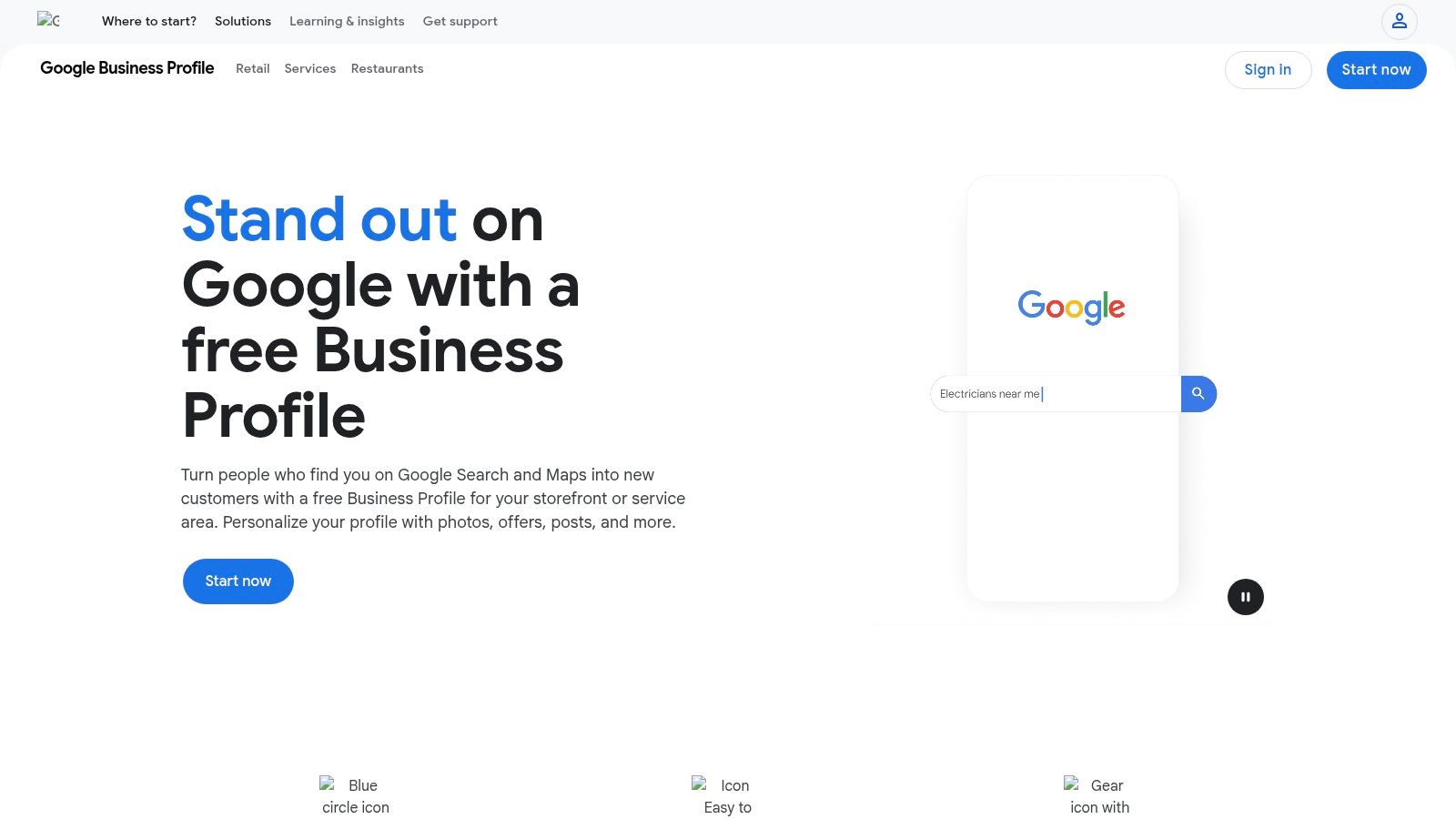
If you only have time to do one directory right, do this one. Google Business Profile is where local intent and action meet. People aren't browsing casually there. They're looking for a place to call, message, book, or visit.
A complete profile gives you control over hours, categories, services, photos, reviews, questions and answers, and service details. For local operators, it's the foundation for “near me” visibility and branded search coverage. If your team needs a stronger playbook, this guide on ranking for local businesses is a useful companion.
What matters most
The most common mistake is treating Google Business Profile like a one-time setup task. It works better when someone owns it weekly. That person should check for suggested edits, review replies, category drift, duplicate listings, and missing service details.
For a dental office in [Neighborhood], the practical setup looks like this:
- Core data: Exact name, local phone, booking link, hours, and insurance or payment details where appropriate
- Service depth: Fill out services like cleanings, implants, emergency visits, or cosmetic treatments
- Proof of activity: Add fresh photos and review responses so the profile doesn't look abandoned
Google rewards profiles that answer a customer's question before they need to click through.
The downside is enforcement. Google can suspend, reject edits, or require reverification, sometimes at the worst possible time. That's frustrating, but it doesn't change the priority. For conversion-focused local SEO, this is still the listing that matters most.
If you want help with reputation management tied directly to visibility, see our reputation management.
2. Apple Business Connect Apple Maps Siri Wallet
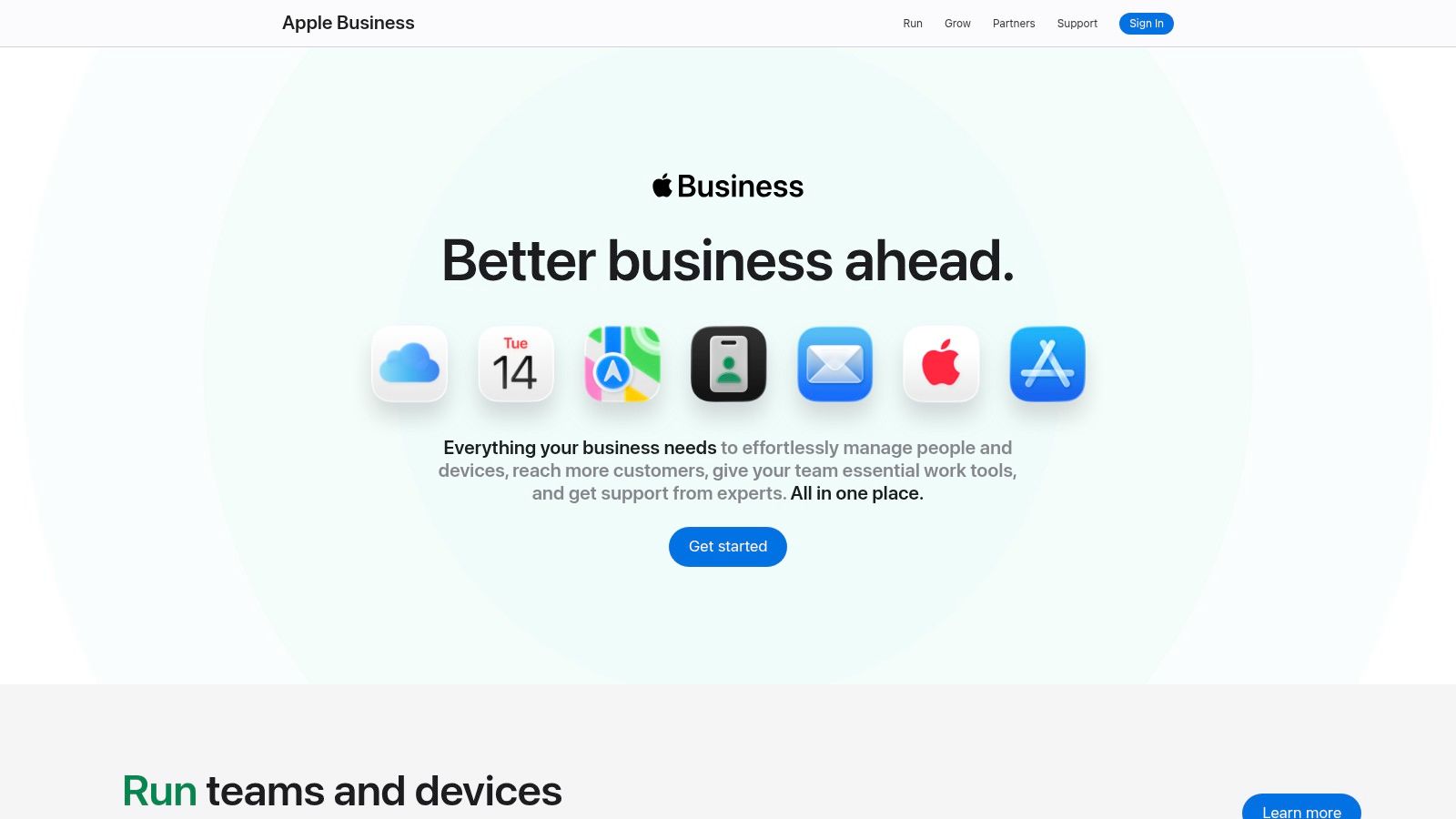
Apple Business Connect matters more than many owners realize. If your customers use iPhones, Apple Maps can be the default navigation layer for how they find, call, and route to your location.
The free profile lets you control business information, photos, logo, hours, and action links. For operators with online booking, ordering, or appointment requests, that cleaner Apple experience can reduce friction, especially for mobile users.
Where it helps
Apple is strong when the customer already knows roughly what they want and needs a trustworthy place card to act. Think vet clinics, salons, senior living communities, or auto repair shops where the search often ends with directions or a tap-to-call.
Here's where Apple Business Connect earns its keep:
- Brand presentation: Logo, photos, and visual polish are better than many old-school directories
- Action links: Good fit for booking, ordering, or scheduling workflows
- Ecosystem reach: Siri, Maps, and other Apple surfaces can all rely on the same place data
Its weak spot is maturity. The toolset isn't as deep or as battle-tested as Google's, and verification can be strict. Still, if you manage multiple locations, this is not optional. It belongs in the top tier with Google and Bing.
Use your Apple profile to match the same business data standards you use elsewhere. Consistency is what keeps one location in [City] from bleeding into another nearby location with similar branding.
3. Bing Places for Business Bing Search and Bing Maps
Bing Places is usually the easiest “yes” on this list. It doesn't demand the same daily attention as Google, and for many businesses you can keep it accurate with a lighter maintenance routine.
That's especially true if you already run a clean Google Business Profile. Bing supports syncing and basic profile management, which makes it practical for lean teams and multi-location brands.
Best use case
Bing is a good fit when you want incremental reach without adding much overhead. It's useful for professional services, home services, auto, and healthcare groups where people may search through Microsoft's ecosystem on work devices or default browsers.
A good setup includes:
- Business details: Correct NAP, website, service categories, and hours
- Photos and amenities: Enough detail that the listing doesn't look skeletal
- Delegated access: Helpful if an agency or regional manager maintains listings
The main trade-off is simpler feature depth. You won't get the same level of customer interaction or content opportunity that you get on Google. But as a free online website directory with real search utility, it's worth claiming and keeping clean.
If your team is trying to optimize your Google Business Profile and wants the same discipline across platforms, Bing should sit right behind that effort.
4. Yelp for Business
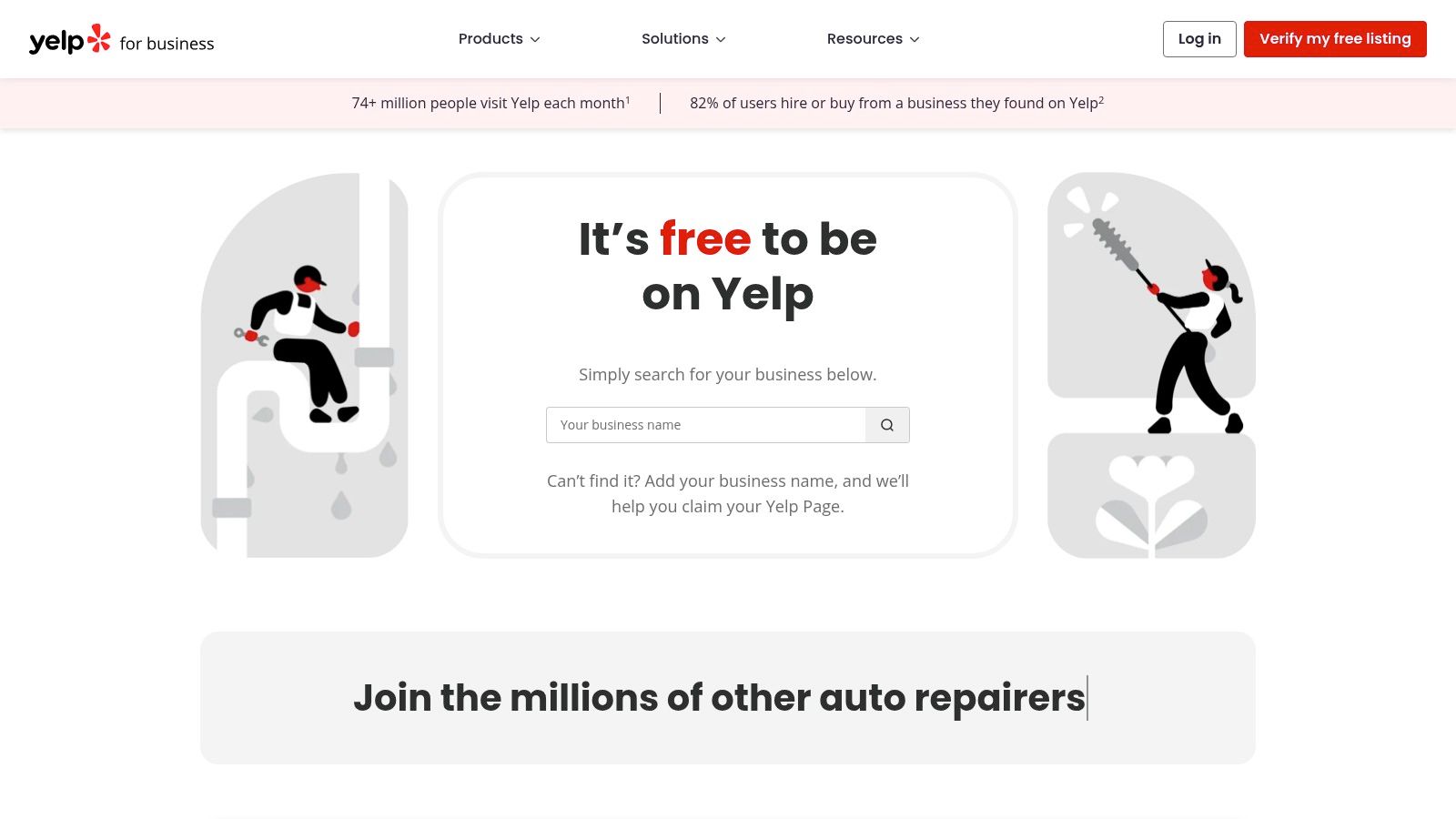
Yelp is polarizing, but that doesn't make it irrelevant. In the right categories, it still influences decisions at the exact moment someone is comparing options.
Restaurants, med spas, home services, pet care, and some retail concepts often see real value here because users come with intent. They're not just collecting names. They're reading reviews, checking photos, and trying to decide who feels safest or easiest to trust.
When Yelp is worth the effort
Yelp deserves real attention if reviews visibly shape the sale in your category. A cosmetic dentist in [City] or a moving company in [Neighborhood] can't afford a stale profile with old photos and unanswered complaints.
What tends to work:
- Complete your free page: Add specialties, service details, and strong photos
- Monitor reviews actively: Reply with a calm, human voice
- Treat lead notifications seriously: If Yelp sends contact opportunities, speed matters
What doesn't work is fighting the platform emotionally. A lot of owners get frustrated by sales outreach or review disputes and stop maintaining the profile entirely. That usually makes the page worse, not better.
A neglected Yelp profile can still rank for your business name. That means it can shape trust whether you like the platform or not.
If you're in a review-sensitive vertical, Yelp belongs in the working set, not the ignore pile.
5. Better Business Bureau BBB.org
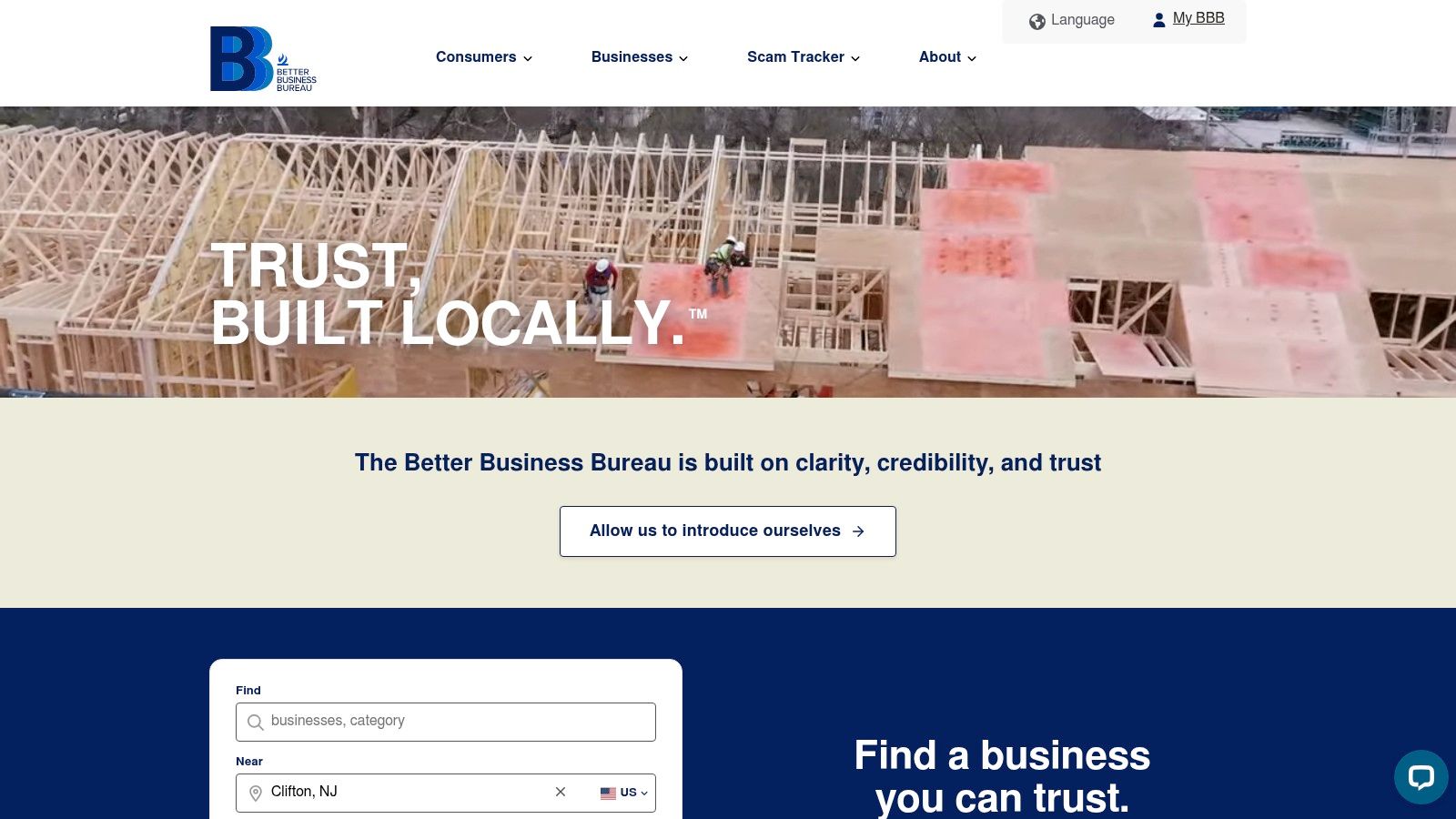
BBB isn't a traffic engine for every business, but it can be a strong trust layer. That matters most in categories where buyers worry about scams, large invoices, contracts, or complaints.
Home services, restoration, legal, senior services, and some medical-adjacent businesses benefit most. When someone searches your brand name and sees a BBB profile, that extra trust surface can help a hesitant buyer move forward.
Who should care most
BBB works best when your sales process involves risk. If a customer is handing over keys, signing a service agreement, inviting your crew into the house, or putting a family member in your care, trust signals matter.
A practical BBB approach looks like this:
- Claim the free profile: Get the business information accurate and branded
- Monitor complaints: Respond promptly and professionally
- Decide on accreditation carefully: Treat it as a business decision, not a ranking tactic
For some categories, accreditation may help sales conversations. For others, the free profile is enough. Don't buy into it blindly. Judge it based on how often your customers mention trust, legitimacy, or fear of making the wrong choice.
One more benefit is branded search coverage. BBB pages often show up when people vet a company before calling.
6. Yellow Pages YP.com
Yellow Pages is no longer a primary discovery channel for most local businesses, but it still has practical value. Think of it as support infrastructure, not a front-line growth engine.
The free claim gives you another place to lock down your business name, address, phone, hours, and categories. That can help reinforce consistency and fill out your branded search results with an additional profile you control.
What it is good for
YP is useful when you want a lightweight citation that doesn't take much time to maintain. It's also fine for established service businesses that want broad baseline presence without ongoing effort.
Use it for:
- Basic citation control: Keep your core data aligned with Google, Apple, and Bing
- Brand search support: Another profile that can appear for searches of your name
- Low-effort maintenance: Set it up, verify it, review it periodically
The downside is obvious. Customer intent there is usually weaker than on Google or Yelp, and the platform often pushes paid upgrades. That doesn't make the free listing bad. It just means you should keep expectations realistic.
For a busy HVAC owner, this is a “do it once well, then check it quarterly” directory.
7. Manta
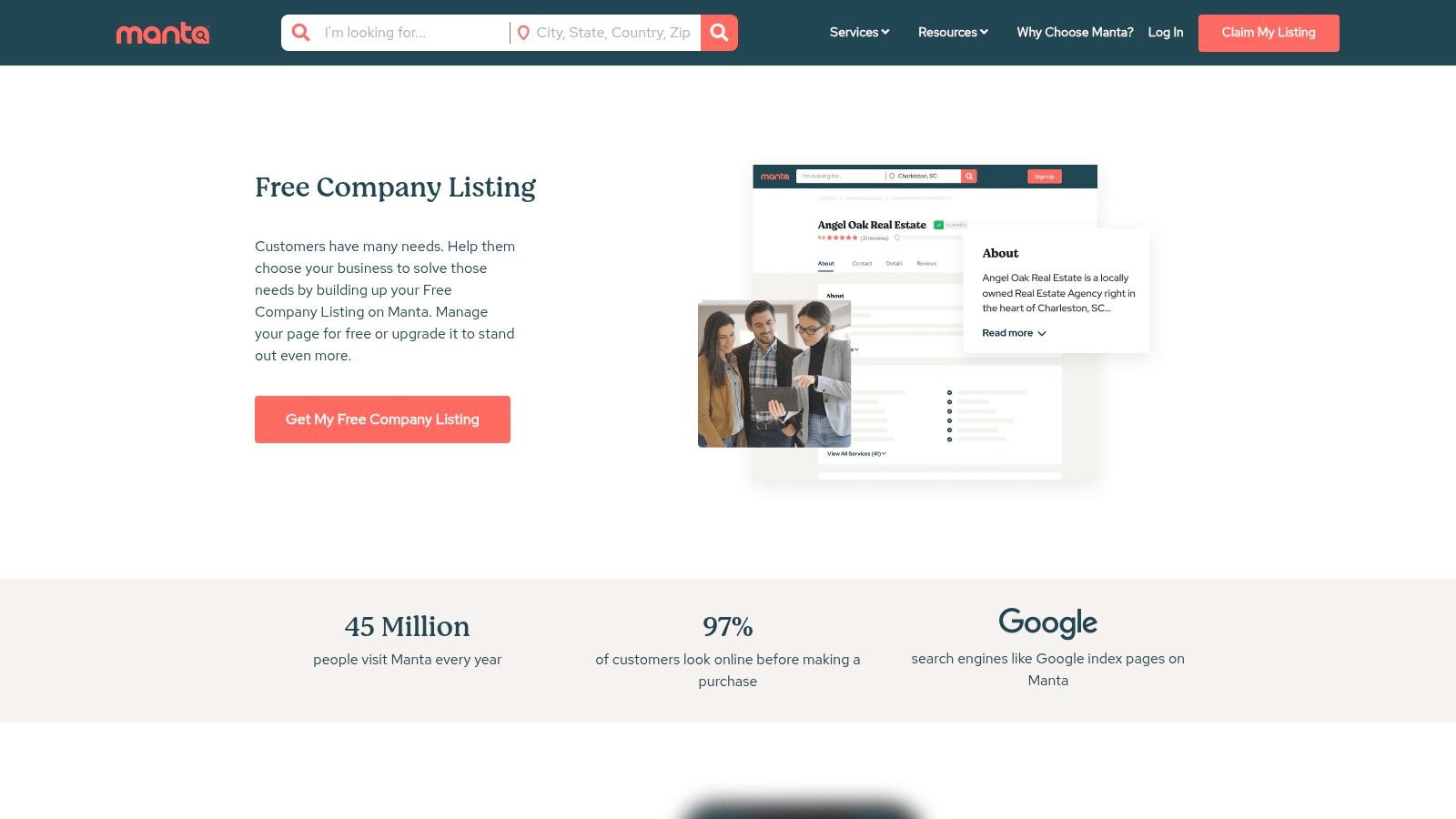
Manta is a secondary directory. That's not a criticism. It's just the right frame. You don't use Manta as your main lead source. You use it to strengthen your online footprint and make sure your business data shows up consistently in more places.
For small businesses, especially single-location operators, Manta is usually easy to claim and populate. The profile gives you another branded asset and another citation point with your service and contact details.
Where Manta fits
Manta works best after your top-tier listings are done. It belongs in the “supporting layer” alongside YP, ChamberofCommerce.com, and Hotfrog.
Good reasons to claim it:
- Citation support: Helps reinforce your core business details
- Brand SERP coverage: Gives Google another business profile page to connect to your entity
- Simple setup: Usually not a heavy-lift project
The catch is quality control. Secondary directories sometimes create sparse or duplicate records, so you need to check what already exists before claiming a listing. Don't create new duplicates just because the signup flow is easy.
For multi-location businesses, build a naming convention before you touch Manta. Otherwise, location data gets messy fast.
8. Foursquare Foursquare City Guide Places
Foursquare is less important as a consumer destination than it once was, but its location data still matters. That's why it stays on serious local SEO checklists.
Its value comes from the broader places ecosystem. If a directory or app relies on Foursquare data, a bad venue record can spread confusion. That makes Foursquare more of a data accuracy play than a direct conversion channel.
The practical trade-off
You use Foursquare to clean up the background layer of your presence. It's especially useful for restaurants, retail, hospitality, and businesses with public-facing venues that may appear across apps and location products.
Here's the trade-off:
- Good: It can help normalize core venue data beyond the biggest platforms
- Less good: Consumer traffic is not the main reason to spend time here
- Watch for friction: Claim and verification can be more annoying than the value suggests
If your business has frequent moves, suite changes, or duplicate location problems, Foursquare can be worth the cleanup. If your top listings are still incomplete, spend your time there first.
Clean data in smaller platforms won't save a weak Google profile. But it can reduce conflict and confusion around your location details.
9. ChamberofCommerce.com
ChamberofCommerce.com is not the same thing as your local chamber membership page. That distinction matters because owners often assume this listing is tied to local chamber authority when it's really a national directory product.
Even so, it's useful in the right role. It gives you another category-and-location profile that can support branded visibility and citation consistency.
Why some operators still use it
This platform is worth claiming if you want a straightforward directory profile and you don't mind a lighter-value listing. It's not usually where customers start, but it can still occupy search real estate around your business name.
It works best for:
- Professional services: Law, accounting, consulting, insurance
- Home services: Electricians, roofers, plumbers, general contractors
- Multi-location brands: An extra layer of profile coverage for each market
The usual issue is maintenance friction. Support and edit requests can require documentation, and premium prompts are common. That's manageable if you treat it as part of your citation hygiene instead of a lead-generation centerpiece.
For operators that need location pages to look trustworthy across multiple cities, it can still earn a spot in the stack.
10. Hotfrog US
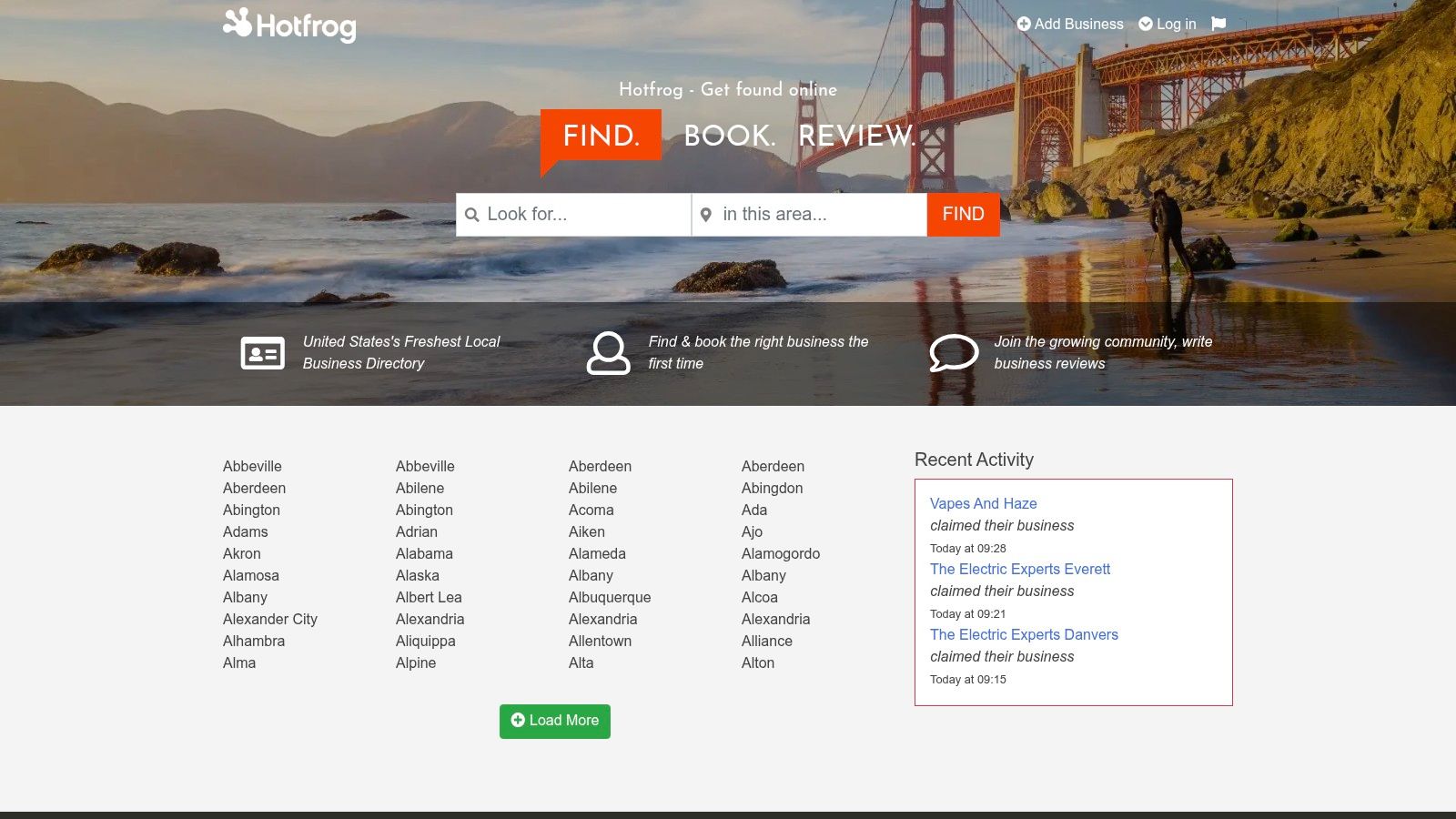
Hotfrog is one of those directories that still makes sense when you understand its lane. It is not a major conversion platform. It is a simple citation and profile play.
The setup is straightforward, which is why many local marketers still include it in cleanup projects. If your core business data is stable, adding Hotfrog is a low-risk way to create another consistent web reference.
Use it lightly
Hotfrog is best for businesses that want more complete branded search coverage without much maintenance effort. Think dental practices, contractors, local retailers, and service businesses that already have a stable directory foundation.
Use it for:
- NAP consistency: Another place to match your canonical business data
- Basic service description: A short profile that reinforces what you do in [City]
- Low-touch support: Something to review occasionally, not weekly
Don't overinvest in it. If your reviews are stale on Google or your Apple listing is missing hours, Hotfrog shouldn't get your next hour of work.
Top 10 Free Online Business Directory Comparison
| Platform | Core features | Quality ★ | Value 💰 | Target 👥 | Unique ✨🏆 |
|---|---|---|---|---|---|
| Google Business Profile (Maps & Search) | Listings, posts, reviews, messaging, attributes | ★★★★★, highest local reach | 💰 Free; best ROI for local discovery | 👥 Multi‑location & local businesses | ✨ Direct Maps Pack influence; 🏆 top for visibility & SEO/AIO |
| Apple Business Connect (Maps, Siri, Wallet) | Place cards, photos, action links, insights | ★★★★, strong iOS visibility | 💰 Free; high value for iOS traffic | 👥 Businesses targeting iPhone users, retail/hospitality | ✨ Brandable visual cards; 🏆 Siri & Apple ecosystem presence |
| Bing Places for Business | Listings, photos, NAP sync, delegation | ★★★, incremental reach | 💰 Free; low maintenance when synced | 👥 Businesses reaching Windows/Edge users, agencies | ✨ Microsoft ecosystem sync; 🏆 easy delegation for agencies |
| Yelp for Business | Review pages, owner replies, messaging, analytics | ★★★★, high‑intent local traffic | 💰 Free basic; paid ads/upgrades available | 👥 Restaurants, home services, retail | ✨ Conversion‑driving reviews; 🏆 strong metro consumer intent |
| Better Business Bureau (BBB.org) | Profile, ratings, complaints, optional accreditation | ★★★, trusted signal for some categories | 💰 Free profile; accreditation is paid | 👥 Home/professional services & trust‑sensitive buyers | ✨ Public complaint history; 🏆 trust/accreditation badge |
| Yellow Pages (YP.com) | Basic listing, photos, categories, reviews | ★★, legacy citation value | 💰 Free basic; frequent ad upsells | 👥 Local businesses seeking recognizable listing | ✨ Legacy brand recognition; 🏆 incremental citation benefit |
| Manta | Free listings, service/profile details, premium upgrades | ★★, citation‑focused | 💰 Free; optional premium visibility | 👥 Small businesses/SMBs | ✨ Quick setup for US listings; 🏆 simple citation addition |
| Foursquare (Places) | Claim venue, analytics, partner data syndication | ★★★, useful for data distribution | 💰 Mostly free; occasional verification fee | 👥 Businesses needing third‑party data accuracy | ✨ Broad partner syndication; 🏆 improves NAP across apps |
| ChamberofCommerce.com | Free listing, industry categories, reviews, premium options | ★★, supplemental SERP coverage | 💰 Free; premium placement optional | 👥 B2B / professional services & local merchants | ✨ Industry/category placement; 🏆 extra branded SERP real estate |
| Hotfrog (US) | Free add/claim, profile fields, multi‑country footprint | ★★, simple citation tool | 💰 Free; limited paid options | 👥 Small/local businesses needing NAP consistency | ✨ Fast, no‑cost citation; 🏆 simple owner controls |
Templates and scripts
The directories that matter most are also review surfaces or trust surfaces. That means listing management and review management should run together, not as separate projects.
If you want category-specific help beyond the basics, our dental reputation management page shows how this looks in a review-sensitive local vertical.
Review request SMS for a dental practice
Keep it short and neutral. Don't mention treatment details, diagnoses, or anything that creates privacy issues.
Hi [First Name], thanks for visiting [Practice Name] today. If you have a minute, we'd appreciate your feedback about your experience: [Review Link]. Thank you for trusting our team.
Review request email for an HVAC company
Subject: Quick favor about your service visit
Hi [First Name],
Thanks for choosing [Company Name] for your HVAC service in [City]. If you can spare a minute, we'd appreciate a review about your experience with our team. Your feedback helps other local homeowners know what to expect.
Leave a review here: [Review Link]
Thank you,
[Company Name]
Positive review response template
Hi [Name], thank you for the kind words about [Business Name]. We're glad you had a good experience with our team, and we appreciate you taking the time to share it. If you ever need help again, we're here.
Negative review response template
Hi [Name], thank you for your feedback. We're sorry your experience didn't meet expectations. We'd like to learn more and see how we can address your concerns. Please contact us at [Phone] or [Email] and ask for [Manager Name]. We take feedback seriously and appreciate the chance to improve.
Measurement and tracking
Busy operators don't need vanity metrics. They need a simple dashboard that shows whether free online website directories are creating calls, bookings, form fills, tours, or qualified leads.
For benchmarking, broad data platforms can help you estimate market and category demand before you invest too much effort. Statista says it reports statistics, consumer survey results, and industry studies from over 22,500 sources on more than 60,000 topics, which makes it useful for directional research when you're evaluating categories or markets. But inside the business, your own conversion data matters more than any directory list.
What to measure every month
Use targets that fit your business model. If you have one dental office, your targets will differ from a regional HVAC brand. Still, these are the right buckets to watch:
- Review volume: Are new reviews arriving consistently on your priority platforms
- Review recency: Did each location get recent feedback this month
- Response time: Are you replying fast enough that prospects see an active business
- Star rating trend: Is sentiment moving in the right direction
- GBP views and actions: Are calls, website clicks, direction requests, and bookings improving
- Lead-to-sale conversion: Are leads from local search closing at a healthy rate
Simple UTM structure for directory links
Tag your website and booking links so you can see which directories send traffic that converts.
Use a simple format like this:
- Source: google, applemaps, bing, yelp
- Medium: organic-listing
- Campaign: location-name or brand-location
- Content: website-link or booking-link
Example structure:
?utm_source=google&utm_medium=organic-listing&utm_campaign=city-location&utm_content=booking-link
Use one naming standard across all locations. If one manager writes “GBP” and another writes “googlemaps,” your reporting gets messy fast.
7-day launch checklist for a review program
- Day 1: Pick primary review platforms for each location
- Day 2: Audit Google, Apple, Bing, Yelp, and top secondary listings
- Day 3: Create approved SMS and email review requests
- Day 4: Build response templates for positive and negative reviews
- Day 5: Add UTM tags to website and booking links in profiles
- Day 6: Assign owners for requests, replies, and listing edits
- Day 7: Launch requests and start weekly reporting
FAQs
Which free online website directories matter most for local businesses
Google Business Profile matters most. After that, Apple Business Connect, Bing Places, Yelp, and a short list of secondary directories usually give the best return for the time spent.
Do free online website directories still help SEO
Yes, but mostly through accurate business data, trust, and branded visibility. Their direct value is stronger when the directory has real user intent and clean profile pages.
Should I submit my business to every free directory I can find
No. Start with the high-visibility platforms, then add secondary directories that help with consistency and branded search coverage. More listings are not always better if they create duplicates or inconsistent data.
What is NAP consistency
NAP means name, address, and phone. Consistency matters because search platforms use those details to connect your business across the web.
How do directories help with near me searches
They help by reinforcing relevance, location accuracy, and business trust. For “near me” visibility, Google Business Profile is the main driver, but supporting directories can help reduce conflicting signals.
How often should I update my listings
Check your core listings weekly if you get regular reviews or operational changes. Check secondary directories at least quarterly, and any time you change hours, phone numbers, URLs, or location details.
Which directories are best for multi-location businesses
Google, Apple, and Bing come first because they influence navigation and search behavior directly. After that, use secondary directories selectively and keep tight control over naming, landing pages, and local phone numbers.
Final Thoughts
Free online website directories still matter, but only when you treat them like part of a conversion system instead of a checklist. The winning approach is straightforward. Claim the platforms customers use, complete the profiles fully, keep business data consistent, collect reviews steadily, and track what turns into calls, bookings, tours, or sales.
For most businesses, the top tier is small. Google Business Profile is the centerpiece because it directly affects local pack visibility, branded search, and customer action. Apple Business Connect and Bing Places deserve attention because they control map and search presence across major devices and ecosystems. Yelp belongs in the top group for categories where reviews heavily influence the sale. The rest are support directories. Useful, but not equal.
That's where many directory campaigns go wrong. Teams spend hours building low-value profiles while their Google category is wrong, their Apple hours are outdated, or their review response queue is empty. Customers don't care how many listings you claimed. They care whether they found the right location, trusted what they saw, and could act without friction.
The practical playbook is simple:
- Finish your core profiles first
- Standardize NAP across every listing
- Add services, photos, hours, and action links
- Ask for reviews in a steady, repeatable way
- Reply to reviews quickly and calmly
- Tag links so you can trace traffic to outcomes
For local and multi-location operators, this work compounds when it's managed consistently. Clean listings support local SEO. Fresh reviews support trust. Strong profiles help both search engines and AI systems understand what each location offers and where it serves. That's what improves discoverability in maps, search, and conversational search tools.
If you want outside help without getting locked into a long contract, month-to-month support is often the best fit. It gives you structure, accountability, and cleanup capacity without adding more work to the front desk or store manager. And if your current setup feels scattered, start small. Fix the top three platforms first. That alone usually gets more traction than submitting to dozens of weak directories.
If you want help turning listings and reviews into measurable local growth, Reviews To The Top can help. We support local and multi-location businesses with month-to-month programs that improve profile accuracy, review flow, response speed, and visibility across Google, Apple, Bing, and key directories. If you're ready to tighten up the basics and make them easier to manage, you can book a strategy call.