If you're posting on X and not checking the data, you're guessing. Analytics in twitter matter because they show which posts move people from a quick scroll to a profile visit, a website click, a message, or a booked appointment. For a local business in [City] or a multi-location brand across [Neighborhood] and nearby areas, that means you can stop chasing vanity metrics and start using free data to support calls, tours, and appointments.
Most owners don't need another social media dashboard. They need a simple way to tell whether a post about emergency HVAC repair, dental implants, med spa services, or senior living tours is bringing in real demand. That's where X can help, especially when you connect it to your website, booking links, and Google Business Profile.
Why Twitter Analytics Is a Goldmine for Local Leads
A lot of local operators assume X is too noisy to matter. That’s the wrong frame. The key question is whether your buyers are using it to react to news, ask questions, compare providers, and click through when something catches their attention. In many markets, they are.
X has 611 million monthly active users, is the 10th most popular social platform in the United States, and its analytics include metrics like impressions, engagement rate, and audience demographics. It also reports a 62.9% male user base in the cited data, which can matter for service lines that skew male, such as automotive or home services, according to Popsters’ overview of Twitter page statistics and analytics.
Key Facts
- Massive reach matters locally because local buyers still spend time on national platforms before they search “near me.”
- Native analytics in twitter are built in and can show what people clicked, replied to, and explored further.
- Profile visits and link clicks signal intent better than raw reach for most service businesses.
- Audience data helps with fit if you’re tailoring posts by service line, city, or customer type.
- Social activity can support local visibility indirectly by strengthening brand relevance and prominence when people later search your business on Google.
That last point gets missed. Google’s local model still comes down to proximity, relevance, and prominence.
- Proximity is how close the searcher is to your location.
- Relevance is how well your business matches what they want.
- Prominence is how established and trusted your brand appears online.
X doesn’t replace local SEO. It supports it. If someone in [City] sees your post, clicks your site, checks your reviews, and then searches your brand name later, that’s useful momentum. The platform becomes one part of a broader local demand system, not a standalone miracle.
Practical rule: If a post doesn’t create curiosity, conversation, or a click, it probably won’t create a lead.
For busy operators, the value is speed. You can post a service update, a limited-time offer, a weather-triggered reminder, or a short customer education thread and know quickly whether the message landed. That’s why I treat X as a live testing environment for local demand. If people in [Neighborhood] reply, click, or visit your profile after a post about “same-day AC repair near me,” that’s useful evidence.
If you're working on a broader local growth plan, this fits naturally with digital marketing for local businesses. The difference is that X gives you immediate behavior signals instead of making you wait for slower channels to tell the story.
Finding and Understanding Your Analytics Dashboard
The native dashboard is simple once you know where to look.
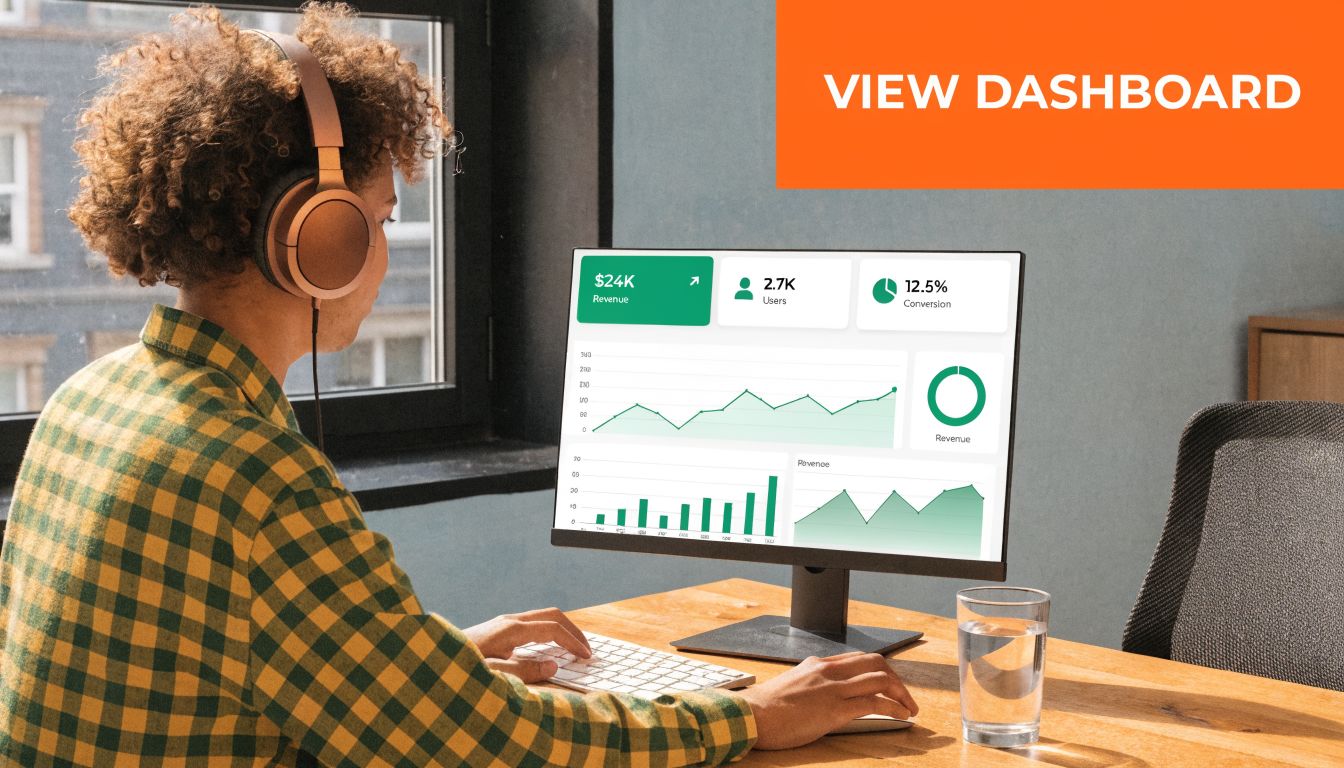
The account-level X Analytics dashboard has been available since around 2014, defaults to the last 28 days, and can be customized. It tracks new followers gained, total followers, profile visits, and link clicks, with a bar graph icon also available on individual posts, as described by PAN Communications’ summary of X Analytics.
Where to click
On desktop, log into X and open the account analytics area from your main navigation. Depending on the account view, you may see access through the left-side menu. On individual posts, click the bar graph icon to open post-level performance.
If you’re a free user, that post-level view is often enough to start. You don’t need a complex reporting setup to make better decisions.
Here’s the fast path for a local team:
- Open the account analytics area and keep the default date range at first.
- Review account-level trends such as profile visits and follower changes.
- Open individual post stats for posts tied to offers, service alerts, or local topics.
- Write down what caused action instead of admiring what got seen.
What each metric means in plain English
A lot of dashboard terms sound more technical than they are.
- Impressions are how many times a post appeared in feeds.
- Engagement rate or ER means interactions relative to impressions.
- Profile visits show people wanted to know more about your business.
- Link clicks show they were willing to leave X and take a next step.
- New followers gained can indicate rising interest, but only if the audience is relevant.
- Audience insights can help you understand who you’re attracting.
That’s enough to make decisions.
Don’t overread one post. Look for repeat behavior across several similar posts.
What to focus on first
For a dental office, start with posts about common treatments, insurance questions, and urgent care issues. For HVAC, track weather-driven service content, maintenance reminders, and financing offers. For senior living, watch posts about community life, family decision concerns, and tour availability.
The biggest mistake is checking numbers without context. A post can get a lot of impressions because of timing or a broad topic and still drive no business value. Another post can get fewer views but create multiple profile visits and direct inquiries.
If you need a clearer definition of one of the core terms before you build a routine, this guide on what impressions on Twitter mean for your business is a useful companion.
A short walkthrough can help if your team hasn’t opened the dashboard before:
A simple weekly dashboard habit
Use this sequence every week:
| Check | What to ask |
|---|---|
| Recent posts | Which post got the most profile visits or link clicks? |
| Service content | Did local service-specific posts outperform generic brand posts? |
| Replies | Did anyone ask a question your team should answer? |
| Profile activity | Did people check your business after a timely post? |
This takes minutes, not hours. That’s usually enough for a local manager to stay in control.
The Metrics That Actually Matter for a Local Business
Most businesses look at impressions first because they’re the biggest number on the screen. That’s normal. It’s also where a lot of wasted effort starts.
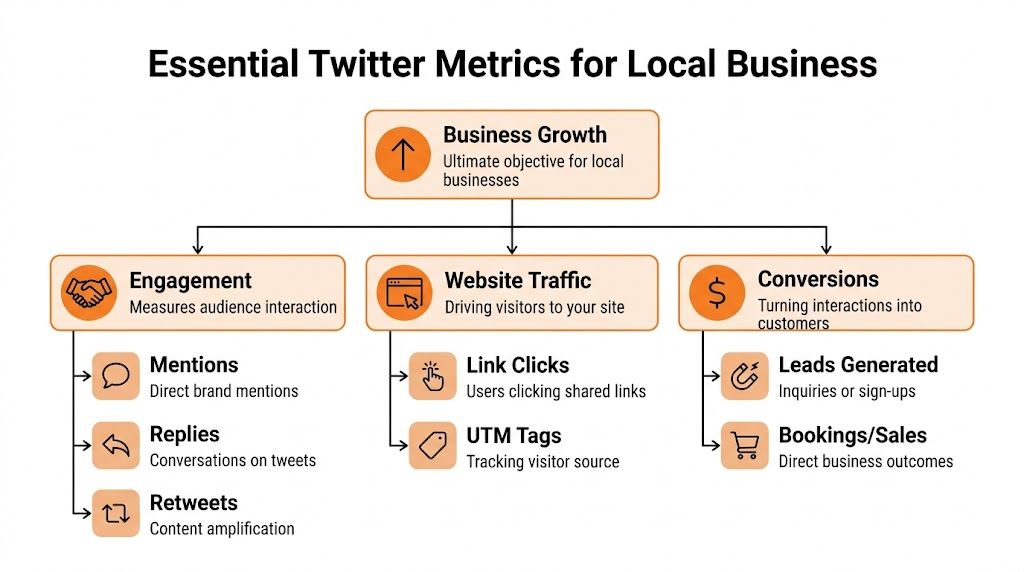
A local business doesn’t need broad visibility for its own sake. It needs signs of intent. For that reason, I care much more about profile visits, link clicks, and replies than I do about raw reach.
High-intent metrics beat vanity metrics
Here’s how that plays out in real life.
A med spa in [City] posts before-and-after policy education, treatment prep tips, and a seasonal offer. The post with the biggest impression count might be the least useful if it produces no clicks. The post that gets fewer views but sends people to the booking page is the better business asset.
An auto shop in [Neighborhood] posts “check your brakes before weekend travel.” If that post triggers replies like “Do you handle same-day inspections?” or “Are you open Saturday?” that’s stronger than passive likes. A person who replies is closer to action.
The overlooked metric here is the reply-to-impressions ratio. According to XBeast’s discussion of misleading X metrics, native tools don’t surface this directly, yet reply-driven content can outperform passive metrics by 2-3x in follower retention for niche audiences. For local businesses, that matters because replies often indicate real questions, local relevance, and possible lead intent.
What to watch by business type
HVAC and plumbing
Watch replies and link clicks on urgent, weather-driven, or maintenance posts. Emergency intent often shows up as direct questions.Dental and healthcare
Watch profile visits after educational content. Keep examples HIPAA-aware and never include patient-identifying details.Vet and senior living
Watch replies carefully. These categories often generate trust-building questions before someone clicks.Auto and home services
Track clicks to service pages and profile visits after promotions or “near me” style messaging tied to [City].
A post with modest reach and strong replies is often more valuable than a post with broad reach and no conversation.
A practical scorecard
Use this simple hierarchy:
| Metric | Why it matters | What to do if it rises |
|---|---|---|
| Profile visits | Buyer wants to vet your business | Tighten bio, location info, and pinned post |
| Link clicks | Buyer is willing to take a next step | Send traffic to a clear service or booking page |
| Replies | Buyer is engaging in public | Answer quickly and move qualified leads forward |
| Impressions | Awareness only | Use for context, not as the win condition |
If you want a broader look at dashboard options and ways other teams organize account data, the Twitter Analytics Dashboard overview is a useful reference.
One more caution. Don’t treat every metric equally. Likes are easy. Replies are harder. Clicks are harder still. For local lead generation, harder actions usually matter more.
If your team needs a reporting structure that ties social activity to actual lead quality, build it into your local SEO reporting rather than leaving X as a separate silo.
Connecting Twitter Data to Website Traffic and Leads
The jump from “people liked the post” to “we can prove this drove business” happens with tracking.
If you post links on X and don’t use tagged URLs, you’re making attribution harder than it needs to be. The fix is UTM tagging. UTM stands for Urchin Tracking Module, and it adds tracking labels to a link so your analytics platform can identify where traffic came from.
How to tag links from X
Use a link builder and create URLs with a consistent format. Keep naming clean and boring. That’s better than being clever.
For example, label traffic like this:
- Source as twitter
- Medium as social
- Campaign as spring_ac_tuneup or dental_implants_city
- Content as post1, video1, or offer_thread
Then send that tagged URL to the right destination page. Don’t dump everyone on your homepage if the post is about one service.
Where to send people
Match the post to the page.
- A tweet about “emergency furnace repair near me in [City]” should land on that service page.
- A tweet about teeth whitening should land on the whitening page or request form.
- A tweet about a senior living open house should land on a tour or contact page.
That alignment is what makes analytics in twitter useful for conversion tracking. If the message, click, and landing page all match, the data becomes cleaner and the user experience gets easier.
Field note: Most local businesses don’t need more traffic. They need fewer leaks between the click and the call.
Review performance on a weekly and longer trend basis
According to Tweet Archivist’s best practices for Twitter analytics, teams get better results when they tie metrics to business outcomes, review performance weekly, and track trends over 60-90 days instead of reacting to every short-term swing. The same source says B2B niches see 2-3x ROI by linking engagement to leads, and weekly review improves optimization by 50%.
That means you should review X traffic with the same discipline you use for paid ads or local SEO. Look at it weekly. Judge it over a longer window.
Connect X activity to Google Business Profile performance
A person may not book directly from X. They may do this instead:
- See your post
- Visit your profile
- Click your website
- Search your business name on Google
- Check your Google Business Profile
- Call or request directions
That’s why your Google Business Profile needs to be ready.
Google Business Profile optimization checklist
| Area | Action | Status |
|---|---|---|
| Business name | Use your real business name consistently | ☐ |
| Primary category | Match your main service accurately | ☐ |
| Services | Add major services for each location | ☐ |
| Hours | Keep regular and holiday hours updated | ☐ |
| Phone | Use the correct local number | ☐ |
| Website | Link to the right landing page | ☐ |
| Photos | Add current, high-quality images | ☐ |
| Reviews | Reply consistently and professionally | ☐ |
That checklist supports Google’s proximity, relevance, and prominence model. Proximity depends on the searcher. Relevance depends on your category and service detail. Prominence grows when people know, mention, and trust your brand.
If you want a stronger attribution setup from social traffic through site behavior, use a process like the one outlined in this guide on how to track visitors to a website.
Your Toolkit for Local Growth and Reputation
Social data is useful only if your team acts on it. For local businesses, that usually means two things. First, use X to attract attention and conversation. Second, use reviews and business profile accuracy to close the trust gap once people start checking you out.
A weekly review rhythm often works better than constant monitoring. If you do export or pull data through tools, DataSlayer’s guidance on Twitter analytics workflows recommends querying historical data in 30-day chunks and aggregating at DAY or TOTAL level instead of HOUR, which improves efficiency and can improve success rates by 40%.
Copy-and-paste review request scripts
Use these after a completed job or visit. Keep them simple and timely.
SMS review request for dental
Hi [First Name], thanks for visiting [Practice Name] today. If you have a minute, would you share your feedback here? [Review Link] Your review helps other patients in [City] find a dentist they can trust.
Email review request for HVAC
Subject: Quick favor after your service today
Hi [First Name], thanks again for choosing [Company Name] for your HVAC service. If you’re open to it, please leave a quick review here: [Review Link]. Feedback helps other homeowners in [City] know what to expect. Thank you for your time.
Review response templates
Positive review response
Thank you, [First Name]. We appreciate you taking the time to share your experience with [Business Name]. Our team is glad we could help, and we’re grateful you chose us.
Negative review response
Thank you for the feedback, [First Name]. We’re sorry to hear your experience didn’t meet expectations. We’d like to learn more and address the issue directly. Please contact [Phone/Email] and our team will follow up. Do not include protected health information or private account details in public replies.
That last line matters for healthcare and any sensitive category. Stay HIPAA-aware. Keep responses general.
Fast, calm responses do more for trust than defensive ones.
Google Business Profile optimization checklist
| Area | Action | Status |
|---|---|---|
| Core info | Verify name, address, phone, and website | ☐ |
| Categories | Set the best primary and secondary categories | ☐ |
| Services | Add service details for each location | ☐ |
| Photos | Upload current exterior, interior, team, and service photos | ☐ |
| Reviews | Assign an owner for daily monitoring and replies | ☐ |
| Posts | Publish updates tied to offers, events, or seasonal demand | ☐ |
7-day launch checklist for a review program
- Day 1 pick one review link for each location and test it.
- Day 2 train front-desk or field staff on when to ask.
- Day 3 load the SMS and email templates into your system.
- Day 4 assign who replies to positive and negative reviews.
- Day 5 update Google Business Profile fields and photos.
- Day 6 post one service-focused update on X with a tagged link.
- Day 7 review replies, clicks, and new reviews, then adjust.
If your social, review, and profile work are disconnected, the customer feels that friction. If they work together, trust builds faster. For teams managing that overlap, this overview of reputation management in social media is worth keeping in the mix.
Frequently Asked Questions
Is analytics in twitter free to use
Basic post-level analytics are available inside X, and that is enough for many local businesses to start. You can see which posts earn clicks, replies, and profile visits before you spend money on another reporting tool.
Which X metric should a local business care about most
Start with profile visits, link clicks, and replies. For a dentist, HVAC company, med spa, or law office, those actions usually matter more than raw impressions because they show someone is close to taking the next step.
How often should I review performance
Weekly works well for most owners and managers. It gives you enough data to spot patterns, compare topics, and connect posting activity to calls, form fills, or appointment requests without reacting to one strong post.
Can X help with local SEO
Yes, indirectly. X will not replace your Google Business Profile, reviews, or location pages, but it can support branded search, strengthen local awareness, and send traffic that later converts through Google searches, map views, or direct calls.
What should I post if I want more calls or bookings
Post around real buying intent. Good examples include service FAQs, urgent problems, seasonal reminders, local event tie-ins, limited-time offers, before-and-after context, and short posts that answer the questions your front desk or service team hears every week.
Match each post to one action. Call now, book online, request an estimate, or check hours on your Google Business Profile.
What does “near me” content look like on X
Use local language people already search and say. Examples include “AC repair in [City],” “same-day dentist appointment in [Neighborhood],” or “water heater replacement this week in [City].” Clear local wording helps the right people recognize that you serve their area.
Should I care about follower growth
Yes, if the followers are local and relevant.
A smaller audience of nearby homeowners, families, patients, or property managers is more valuable than a large audience that will never call your office or book a job.
How do I know whether X is influencing offline conversions
Track patterns across channels. Check whether posts with strong link clicks or profile visits line up with increases in tagged website sessions, phone calls, appointment requests, branded searches, and Google Business Profile actions.
For local service businesses, the path is rarely linear. Someone may see a post on X, search your business name later, read reviews on Google, then call from your profile. That still counts as influence, and it is why X analytics make more sense when you review them next to your GBP and call tracking data.
If you want help connecting social activity to calls, bookings, reviews, and local search performance, Reviews To The Top can help. We work with local and multi-location businesses that need practical reporting, cleaner processes, and a clearer link between online visibility and offline revenue. If you want to talk through your setup, you can book a strategy call.